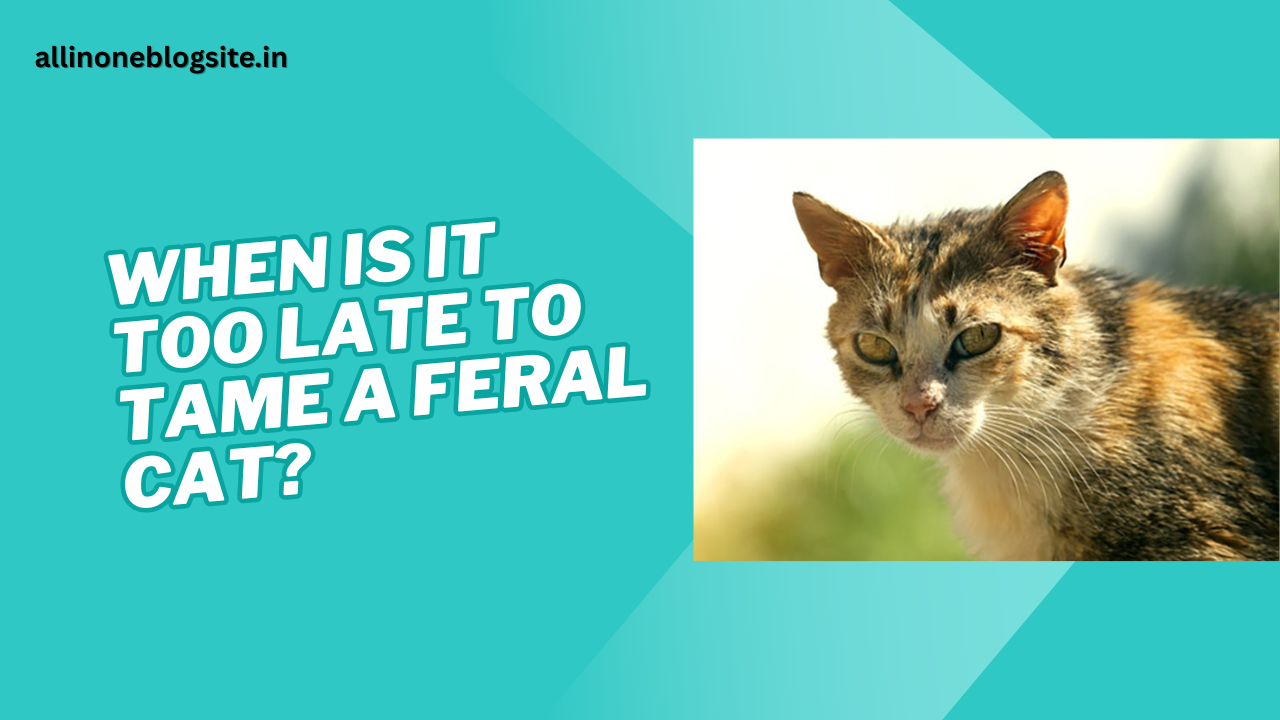
Feral cats are a type of cat that lives a wild, free and cautious life. They do not come into contact with humans, they rely entirely on their instincts and they usually pass on their cautiousness to the kittens. Still, there are people who speculate if it is ever too late to tame a feral cat, that is, to transform that scared animal into an affectionate and friendly one.
The fact is: the taming of the feral cat is doable but it is a matter of age, environment, health, and patience. This guide will walk you through taming feral cats — the times when it can be done, the times when it is still hard and the proper way to go about it.
1. What Makes a Cat “Feral”?
Understanding what a feral cat really is, is important before you learn when it is too late to tame one.
- They are born and raised without any contact with humans.
- Outdoor living and relying on instinct for survival characterize them.
- Humans are often perceived as threats and, therefore, these cats are afraid of people.
These cats are not at all:
- Stray cats that used to be domesticated but are now lost or abandoned.
- Semi-feral cats that will accept human presence or touch only if certain conditions are met.
A feral cat is not simply a nasty cat but rather a wild one, survival having influenced its character. Grasping this cat’s nature is the first step to taming the animal.
2. The Role of Age in Taming Feral Cats
The younger the cat the easier the taming process will be. Nevertheless, success is not solely determined by age.
2.1 Kittens Under 8 Weeks
- Socialization is least difficult.
- Can become accustomed to humans rather quickly, usually within a week or two.
- Trust is built rapidly through regular handling, gentle voices, and feeding.
2.2 Kittens 8-12 Weeks
- Can still be tamed, but the process will take longer.
- They may hiss or resist being held at first.
- Constant interaction will help them get used to humans.
2.3 Kittens 3–6 Months
- Patience and consistency can help in socialization.
- Weeks or months of quiet exposure might be needed.
- Human positive interactions are crucial.
2.4 Adult Feral Cats (6 Months and Older)
- Difficult to cope with, particularly if no contact was made prior.
- Their strong instincts make them vulnerable and they consider humans as a threat.
- Each case will depend on the individual character and the caregiver’s perseverance.
2.5 Senior or Long-Term Feral Cats
- Usually, completely taming them would be impossible.
- They will be able to cope with the presence of a caregiver but would never be interested in being petted or indoor living.
- The humane option may be TNR with the ongoing provision of food and shelter.
To sum up: the age limit is not fixed, but the older the cat, the more patience and skill will be needed.
3. Factors That Affect the Success of Taming
Age is a factor, but other elements can also determine whether or not a feral cat can be domesticated.
3.1 Previous Exposure to Humans
Cats that have seen people feeding them or walking nearby might be less afraid. Completely wild cats, on the opposite hand, consider humans as hunters.
3.2 Health and Stress
A sick or injured cat might resist taming as it is in pain or is scared. Socialization efforts should be postponed until medical treatment is completed.
3.3 Personality
Cats have different temperaments just like humans do. Some are daring and inquisitive, while the others are careful or even defensive.
3.4 Environment
Taming is made much easier in peaceful settings. Fear can be heightened due to loud noises, children, or active pets.
3.5 Consistency
Cats acquire knowledge through repetition and habits. Trust is built up by feeding at the same time, using the same tone of voice and calm behavior.
4. When Is It Too Late to Tame a Feral Cat?
There is no definite time when taming gets “too late,” however, there are phases where the odds become small.
4.1 If the Cat Is Over a Year Old and Fully Wild
These are the kinds of cats that despite all the care and taming techniques remain wild. They will perhaps allow you to feed them, but they will be frightened at the sight of you.
4.2 If the Cat Shows Continuous Aggression
Some cats simply can’t endure their defensive instincts. Biting, hissing, or attacking every time you come close is a sign to stop trying to handle them directly.
4.3 If the Cat Has a Colony Bond
Feral cats live in groups for security. A cat that is part of a group may resist leaving. Taming of such cats may lead to stress and separation anxiety.
4.4 If the Cat Suffer Extreme Trauma
Cats that experienced abuse or extreme fear will not trust people again. In this regard, being kind means giving to them safe space, food, and shelter, and not taming by force.
5. The Science of Feral Cat Behavior
Feral cats base their actions strictly on instinct, as opposed to learned behavior. The reactions are due to thousands of years of survival and hence, the genetics of the cat comes through.
Key Behavioral Traits
- Fight or flight reflex: the first thing they do is to choose the safest path.
- Territorial marking: they take over the area they are familiar with and defend it.
- Limited social structure: they have pets among the few in their colony and distrust only one outsider.
- Human scent fear: the smell of humans can indicate danger.
The comprehension of such instincts will help the caregivers form an idea of how to approach taming in a manner that is respectful.
6. Taming Kittens: The Ideal Starting Point
In case of taming kittens, a lot of the difficulties associated with the process are already eliminated. The trick is to make the exposure gentle and the experiences positive.
Step-by-Step Guide:
- Initial Confinement:
- Kitty must be put in a peaceful and safe place such as a tiny room or a large crate.
- Feeding, watering and litter are to be provided.
- The atmosphere must be soothing and expected.
- Limited Handling:
- Start by talking softly before you touch.
- Allow the kitten to see your hand without you coming too close too quickly.
- Use goodies to gain the kitty’s trust.
- Gradual Contact:
- As soon as the kitty starts eating near your location, you may gently stroke the area under the chin or on the head.
- Always keep the contact short and finish it at a good time.
- Social Exposure:
- After the kitten has settled down, let other people pet it.
- Only after the kitten has gained confidence, introduce quiet pets.
- Adoption Stage:
- Kittens usually become ready for adoption in a period of weeks to months, depending on their age.
- Continue to reinforce positive interactions until the baby completely trusts people.
Patience and consistency are the foremost aids in this process.
7. Taming an Older Feral Cat
The treatment of adult feral cats needs a different approach. They will not take quickly done methods or forced handling.
7.1 Create Trust Through Feeding
Food is the basis of a connection.
- Feed the cat at a fixed time each day.
- Speak kindly and remain close to it while it is eating.
- Widen the gap gradually over a period of days or weeks.
7.2 Provide Shelter and Routine
Allow the cat a cozy, dry, place, and unoccupied space, where it is feeling secure. With time, the animal will link that area, and your being there will mean safety.
7.3 Avoid Eye Contact
Staring directly might seem menacing. Slowly blink or turn away just a little to signal that you are not a threat.
7.4 Use Food as a Bridge
Cats gradually begin to regard you as a source of food rather than a danger. Utilize wet food or tuna while training to make the bond even stronger.
7.5 Attempt Interactive Play
As soon as the cat calms down, try using wand toys or string teasers. Cats play out their curiosity and it is also a way of controlling their fear. It may take months to get an adult feral cat used to humans or it may not even be totally possible but the trust, however limited, is still a victory.
8. How to Tell if Feral Cat Can Be Socialized
You cannot always turn a wild cat into a house pet. However, here are some signals through which the cat might be easier to tame:
- The cat will eat while you are there.
- It shows you trust by slowly blinking or lowering its guard.
- It will no longer hiss after a number of times being fed.
- It will be able to explore your place without panic.
- It will let you do short touching or smelling of your hand.
If none of these signs show up even after several weeks, the cat might just be too wild for the taming process.
9. Taming Process Mistakes to Avoid
Taming a wild cat is an experience that puts you in the shoes of the animal. Overcoming these errors, which prevent the build-up of trust, will slow down the progress:
- Going too fast. Let the cat control the pace.
- Noisy environment and quick movements. They activate the animal’s survival instincts.
- Hand grabbing or trapping. Use humane traps or carriers.
- Punishing the scared behavior. It only adds to the anxious feeling.
- Not observing the animal’s body language. Ears back, tail flicking, and growl are all signs of fear.
Respect is a bridge to trust while the opposite is a wall of fear.
10. TNR (Trap-Neuter-Return) as a Humane Option
TNR is recommended for the untrainable cats as the middle option between kindness and pragmatism.
TNR Explained
- Trap: Catch the cat with a safe trap in a humane manner.
- Neuter: Give it to a veterinarian for sterilization and vaccination.
- Return: Let it go back to its area.
TNR Advantages
- Keeps the cat population under control.
- Lessens the aggressive behavior.
- The cat can live comfortably in its natural surroundings.
- The community gains a better way of taking care of the colony.
Some cats in TNR programs become community cats—semi-tame individuals who enjoy outdoor life with human support.
11. Myths About Taming Feral Cats
Feral cats are surrounded by a lot of misconceptions. Let us debunk some of them.
Myth 1: Feral Cats Are Mean
Fact: They are afraid, not aggressive. Fear is the main reason of their behavior.
Myth 2: You Can Tame Any Cat With Enough Love
Fact: Some feral cats, regardless of time spent, remain wild.
Myth 3: Feral Cats Can’t Be Good Pets
Fact: Early socialization can turn some of them into great friends.
Myth 4: Adult Feral Cats Can’t Be Helped
Fact: Even if they are not tamed, they still can be helped by providing food, shelter, and TNR care for healthier living.
12. Ethical Considerations in Taming
Taming a feral cat isn’t only a matter of time — it is also an ethical issue. Ask yourself the following:
- Will the cat’s quality of life improve if it goes indoors?
- Can I devote the necessary time and provide the needed space?
- Will it be happier staying outdoors and receiving protection and food?
Compassion sometimes means respecting the cat’s choice to live free.
13. Building Long-Term Trust
If you persist in taking care of a feral cat, you should concentrate on the stable, lifelong trust building.
Ways of Progress Maintenance
- Always feed and approach at the same times.
- Speak calmly and in a low voice.
- Never make changes suddenly to the cat’s environment.
- Treats can be given as a reward for good behavior.
- Let the cat come to you instead of you forcing contact.
With time and effort, a feral cat may come to see you as a safe person.
14. Can You Keep a Tamed Feral Cat Indoors?
If a cat that was once feral is well-behaved around people, it can be an indoor cat and be happy. However, this transition must be a gradual process.
Indoor Transition Tips:
- Begin with a small, quiet room.
- Incorporate hiding areas and scratching posts.
- Use familiar scents, like a blanket from its outside shelter.
- Provide gradual exploration.
- Present rich toys and windows for stimulation.
There are cats that will never be solely indoor pets — but it is okay. A partial taming can still mean a safe and comfortable life.
16. Most Commonly Asked Questions
Q: Can a wild cat love mankind some day?
Some of them do. In cat vocabulary, love implies trust, comfort, and even passive acceptance. It might not be cuddling, but the quiet sharing of space with the cat may be speaking of acceptance and that love.
Q: What was the oldest feral cat successfully tamed?
There are claims of 5–7-year-old cats being able to adapt to human life after months of careful treatment, but such cases are uncommon.
Q: Should I take a wild cat at once indoors?
No. A wild cat might be terribly frightened by sudden confinement. Create the outdoor familiarity first, and only then try indoor life.
Q: What is the time required to tame a feral cat?
It can take anywhere from several weeks to a whole year depending on the animal’s age and personality.
17. Last Thoughts: Compassion Instead of Control
Taming wild cats is not about making changes; it’s about giving chances. Some cats will eventually turn into loving companions. Others will remain aloof but peaceful. Both scenarios are legitimate. The aim is not possession; it is comprehension. Regardless of whether you opt for taming or TNR, your kindness will have an impact.
Do Not Forget:
- It is not really “too late”, but it could be too overwhelming for the cat.
- The cat’s comfort level should be the compass for your actions.
- Every little increase in trust is a victory.
Also Read: Why Do Cats Scratch You When You Rub Their Belly?.