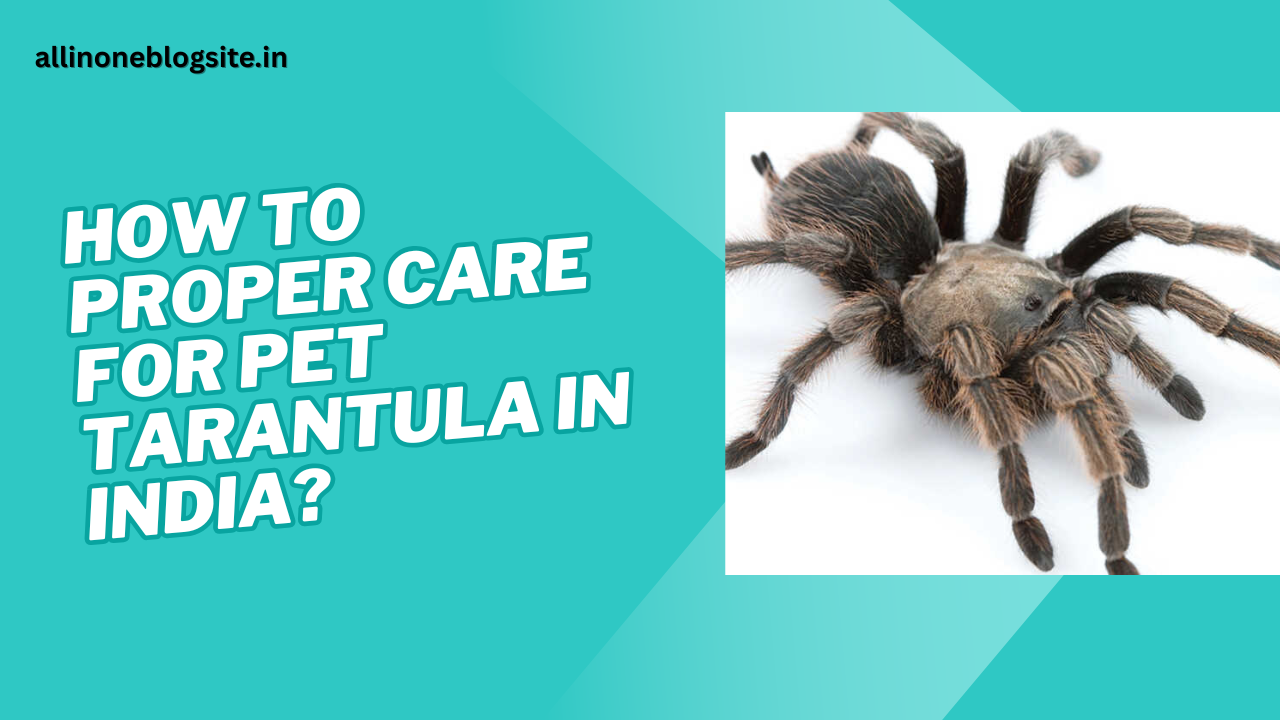
Tarantulas are unusual pets. They are not as common as cats or dogs, slowly gaining the limelight in India. Many are curious about how to keep them because they look fascinating, live long lives, and do not require daily walks or washing like furry pets.
But caring for a tarantula is not just plopping it into a box and giving it some insects to munch. These creatures need their special requirements to be fulfilled to stay healthy and free from stress. This guide will explain it all step by step. It is written in simple English, so anyone who is a beginner can understand.
Why Tarantulas Make Interesting Pets
Before going into care details, let us see why people choose tarantulas as pets.
- They are silent.
- They do not smell if the enclosure is clean.
- They do not have to be fed as often as other animals.
- They are long-lived, especially females, who can live up to 20-30 years.
- They are not as demanding space-wise as dogs or cats.
- They are unique turning heads wherever they go.
However, having one comes with challenges:
- Some species are aggressive and not fit for beginners.
- They are fragile; even a fall can cause injury or death.
- Handling is not recommended, as stress can kill.
- They need a controlled environment (temperature and humidity).
- Tarantula bites are painful but very rarely life-threatening.
Is It Legal to Own a Tarantula in India?
One important question many ignore is the Pandora virus of legality. India, unlike the Land of Liberty or Europe, enforces very stringent wildlife laws.
- Native Indian tarantula species are protected under the Wildlife Protection Act; therefore, any form of collection from the wild is prohibited.
- Imported tarantulas sometimes appear in exotic pet trades, but a seller’s licensing status should be determined first.
- Always ask for proper documentation before purchasing. Illegal possession may subject you to fines and legal complications.
Tip: Look online for licensed exotic pet breeders or hobbyist communities. Please do not buy from roadside sellers.
Beginner’s Choices for Species in India
Not all tarantulas are suitable for the school; some are calm and accommodate easy maintenance, while others may be defensive or very fast. For Indian beginners, it may be better to start with hardy and calm species.
The Best Known Species for Beginners Worldwide
- Chilean Rose Tarantula (Grammostola rosea)
- A calm and slow-moving tarantula.
- It can live for about 15 to 20 years.
- It eats less and sometimes fasts for months.
- Mexican Red Knee Tarantula (Brachypelma hamorii)
- Beautiful in color combinations of red and black.
- Calm and fairly easy to handle (though it is still not recommended to handle).
- Longevity: greater.
- Curly Hair Tarantula (Tliltocatl albopilosus)
- Hardy species.
- Adaptable to different environments.
- Really good for a first-time owner.
Species to Avoid for Beginners
- Indian ornamental tarantulas (Poecilotheria species): Beautiful but fast and defensive. Their bites hurt more.
- Old-world tarantulas: More or less rather aggressive; don’t have urticating hairs so they bite in defense.
- Fast arboreal species: Hard to manage in enclosures.
Setting Up a Tarantula Enclosure in India
Tarantulas are not particularly demanding; they only require the proper setup in which to flourish.
Enclosure Size
- Good rule: three times the leg span of the tarantula in width and 1.5 times the tarantula leg span for height.
- The greater the height, the more dangerous it becomes for the tarantula should it fall.
Type of Enclosure
- Glass terrariums make an excellent enclosure because one can see its inhabitants.
- Plastic boxes with holes for ventilation are also an option.
- On the contrary, wire cages should be avoided, as tarantulas tend to get their legs stuck in these.
Substrate
Enclosure floors are of utmost importance since tarantulas will occasionally use them for their burrowing needs and for resting places.
- Best: coconut fiber, peat moss, or clean soil without fertilizers.
- Depth for terrestrial species: 3 to 5 inches; deeper for burrowers.
- Avoid sand and gravel.
Hiding Spots
The tarantulas are shy and demand their hiding places to feel secure.
- Half coconut shells, clay pots, cork bark, or some form of artificial caves.
Environmental Temperatures in India
The country offers different climates; but tarantulas will always favor warmth.
- Ideal range: 22°C-28°C (72°F-82°F).
- In icy cold areas (in the north winters, for example), a small room heater may have to come in handy.
- Do not place them under direct sunlight; tarantulas just hate bright light.
Humidity
Humidity will depend on the species.
- Most tropical tarantulas: from 65% to 75%.
- Desert species prefer less humidity around 50%.
- A light misting will suffice. Do not wet the substrate.
Water
- A shallow water bowl will suffice.
- Change water every day.
- Never deep one, as the small tarantula may drown.
What Is Prey For Tarantulas?
Tarantulas are carnivores. They feed upon live prey, and care has to be taken in this respect.
Commonally Found Foods in India
- Crickets (available in markets easily).
- Cockroaches (dubia roaches are becoming very popular with hobbyists).
- Mealworms and superworms.
- Locusts or grasshoppers occasionally.
Feeding Frequency
- Spiderlings (babies): once every 2–3 days.
- Juveniles: twice a week.
- Adults: once a week or less often.
Tips
- Never feed prey bigger than the tarantula itself.
- Remove any prey left over after 24 hours as it can harm your spider.
- Do not overfeed. Tarantulas can survive weeks without food.
Molting: An Essential Stage of Tarantula Care
Tarantulas have to shed in order to grow. It is the time of utmost weakness.
Things to Spot Before Molt
- Will not eat.
- Inactive.
- Dull colors.
- Lying on its back (typical activity before mite).
Molting Care
- Do not mess with the tarantula.
- Do not feed it until its body hardens again (usually 1–2 weeks).
- Keep humidity a little higher to aid with shedding.
Should Tarantulas Be Handled?
Many people buy tarantulas to hold them, but experts advise against it.
- Tarantulas are rather fragile; a fall can mean death to them.
- Stress is elicited upon handling.
- Some have urticating hairs that can really irritate your skin or eyes.
- Bites though rare are painful.
Better to just look at them and enjoy them.
Health Problems of Tarantulas
Though Tarantulas are hardy, they also face health problems.
Common Problems
- Dehydration: If the abdomen is shriveled and the tarantula shows lethargy, simply offer water.
- Mite Infestation: A few stray white mites can do a lot of harm to a tarantula. Keep the enclosure clean.
- Mold in the Enclosure: Caused due to excessive moisture. Work on ventilation.
- Molting Problems: Problems during molting may end up with the spider losing legs or dying if it cannot molt properly.
- Injuries: Fall or trivial prey might be sources of minor injuries.
When to See a Vet
There are not many exotic vets found in India. See if you can find one handling reptiles or arachnids. Bring the tarantula with you if there is:
- Serious injury.
- An animal unable to molt.
- Animals that refuse to eat for many months with prominent weakness.
Cost of Owning a Tarantula in India
Owning a tarantula is not as very expensive as owning a dog or a cat; however, the initial setting and proper care do cost.
- Price of tarantula: ₹2,000 to ₹20,000 depending upon the species.
- Enclosure setting: ₹3,000 to ₹8,000.
- Feeding: ₹300-₹500 per month.
- Vet visit, from time to time, ₹1,000-₹3,000.
Myths Regarding Tarantulas in India
Several myths exist that instill fear regarding tarantulas. Let us bust a few:
- Myth: All tarantulas are deadly.
- Truth: Their venom is rarely potent to humans.
- Myth: Tarantulas attack humans.
- Truth: They prefer to hide and are shy.
- Myth: They require feeding everyday like dogs.
- Truth: Sometimes they go weeks without food.
- Myth: They are filthy animals.
- Truth: They stink only if the enclosure is dirty.
Daily, Weekly, and Monthly Care Routine
Daily
- Check water dish.
- Ensure enclosure is closed securely.
Weekly
- Feed the tarantula (depending on age).
- Remove uneaten prey.
- Lightly mist enclosure if needed.
Monthly
- Spot-clean substrate.
- Check for mold or mites.
- Replace water dish if dirty.
Every 6–12 Months
- Deep clean enclosure. Replace substrate.
How Do We Gain or Lose If You Keep a Tarantula in India?
You Gain
- Relatively easy to care for compared to dogs or cats.
- Fascinating to watch.
- Long-life expectancy.
- A rare pet especially for lovers.
You Lose
- Exotic pet laws can get confusing.
- Vets are very few.
- Some species may be aggressive.
- Not a cuddle pet.
Final Words
Tarantula owning in India is definitely possible but requires the application of preparation, patience, and respect toward the animal. They are not some horrifying monsters, nor would they make great toys for some children. If the tarantula is given a correct enclosure, proper food, and a safe environment, it will live a long and stress-free life.
Research well, make purchases from legal sources, and commit to the life-long care. When done in the right spirit, a tarantula keeper can be very nicely rewarded.
Frequently Asked Questions Regarding Pet Tarantula Care in India
1. Can tarantulas recognize their owners?
No, tarantulas do not recognize people like a dog or a cat would. There is no formation of emotional attachment. However, they might get acclimated to the vibrations and presence inside their enclosure, which calms them down.
2. How long can a tarantula live without food?
A healthy-grown tarantula can go on without food for weeks or even months, but they should always be provided with clean water. Spiderlings and younger tarantulas require food much more often.
3. Do tarantulas require some type of light to exist inside their enclosure?
No, tarantulas do by no means require any kind of artificial lighting. They are actually more comfortable in dim or dark areas. Just ensure there is a normal day-night cycle in your room. If you use bright light, it could stress them.
4. Can one keep two tarantulas in an enclosure?
No, tarantulas are solitary creatures. Usually, fighting and cannibalism ensue when two are occurred in an enclosure. Each tarantula must, therefore, have its own enclosure.
5. Do tarantulas have boredom?
Unlike mammals, tarantulas do not experience boredom. They are very simple creatures that need only a safe, clean, and comfortable environment. They only require a hide and a compost substrate to be happy.
6. How does one safely transport a tarantula to a new enclosure?
The best way would be a catch cup. The tarantula is gently coaxed into a plastic container and from there transported into its new enclosure. Never handle with bare hands and try to keep movements slow to avoid stress.
7. Can tarantulas regenerate lost legs?
Yes, if a tarantula loses a leg, it can resellagate it-every time it molts. At first, the leg will look diminutive, but each molt will bring the leg closer to normal size.
8. What to do if your tarantula escapes?
Stay calm. Keep doors and windows closed to limit movement. Now, quietly search for it in dark corners, under furniture, or along walls. Set a container and carefully push the tarantula into it. Do not try to grab it with your bare hands.
9. Are tarantulas noisy during night hours?
No, tarantulas are silent pets. They do not make noises as dogs, cats, and birds do. The only noise you could hear is from prey insects moving inside the enclosure.
10. Can tarantulas be transported in India while travelling?
Yes, it can be, but with great care. Use a secure plastic container perforated with holes in its upper half and allow some soft tissue or substrate at the bottom. Do not subject it to shaking, direct sunlight, or any form of heat while travelling.
Also Read: What Are the Best Tanks for Pet Salamanders?