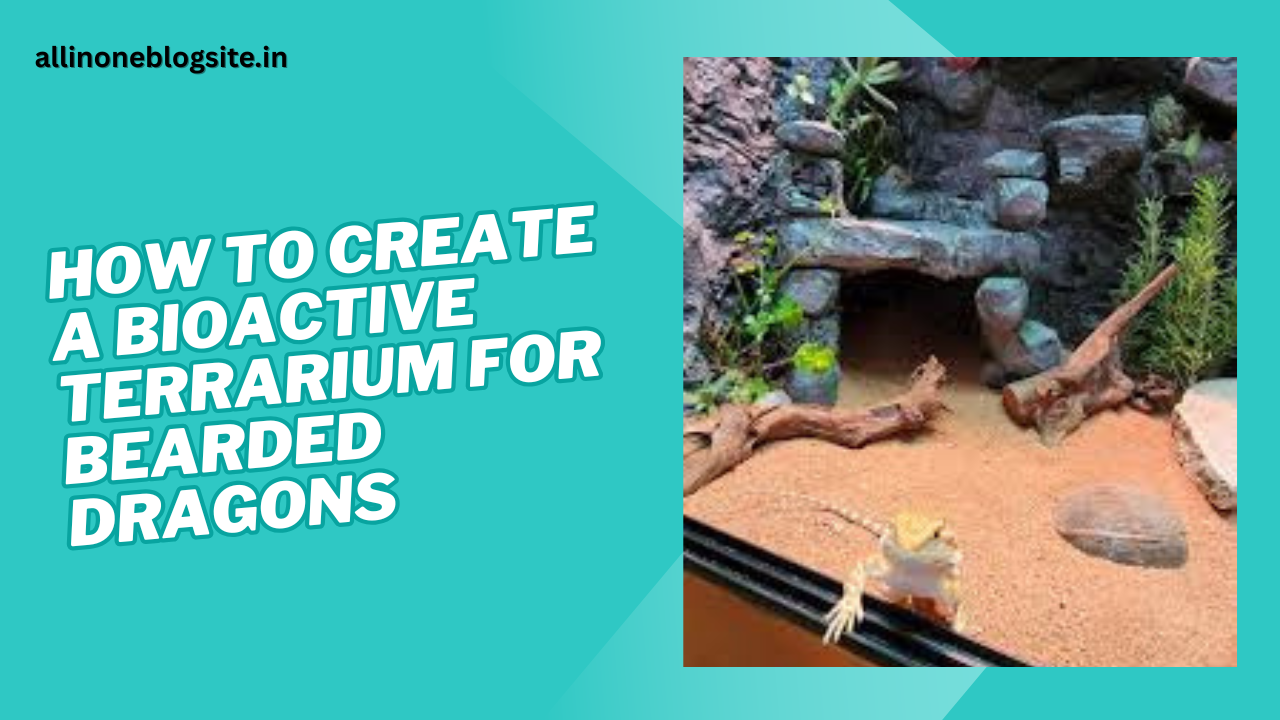
Keeping a bearded dragon is much more than simply putting it inside a glass tank. Such reptiles need to feel that the environment they are in is natural and balanced. Many keepers nowadays are opting for bioactive terrariums. These setups look interesting, do not smell, and are more conducive for the well-being of the dragon themselves.
This guide walks you through beyond what is a bioactive terrarium, right into understanding the best of its benefits and challenges as well as step-by-step instructions on making one, by which time, you will be well equipped to make your choice and set it up should you wish to.
What Is a Bioactive Terrarium?
A bioactive terrarium is an enclosure intended to operate as a mini-ecosystem. Instead of paper towels, mats, or tiles, it uses good earth, plants, and tiny organisms in recycling of wastes.
Simply put:
- The substrate is the soil as it works out in nature.
- Clean-up crew (small insects and microfauna) decomposes waste such as feces, food remains, and shed skins.
- Plants absorb nutrients through soil and help to balance humidity.
Like bringing a bit of wild into your home.
Reasons for Choosing a Bioactive Setup for Bearded Dragons
Not every keeper wants a bioactive terrarium. But for those who do, the benefits can really get their juices flowing.
Benefits
- Natural behavior: The dragon can dig, burrow, and explore.
- Cleaner environment: Waste recycling by microfauna.
- Less odor: The system mutes any exit of bad smells.
- Long term stability: Less cleaning out of the terrarium.
- Enrichment: Environments with enrichment keep the dragon active.
- Aesthetic appeal: Looks like a real desert scene.
Challenges
- The cost of setting it up: It is more expensive than usual for a good initial build.
- Maintenance knowledge: Have balance of heat, humidity, and the clean-up crew.
- The survival of plants: Some plants just don’t cope in hot dry environments.
- The risk of impaction: Loose substrates have to be selected with care.
Common Myths About a Bioactive Terrarium
Many points on forums.[1] Some erroneous points need demystifying.
- Myth 1: Bioactive setups are for tropical animals only.
Wrong. With the proper substrate and plants, arid bioactive tanks work excellently for desert reptiles like the bearded dragon. - Myth 2: All loose substrates pose a danger.
Not true. Properly selected mixes (sand + soil + clay) are safe if maintained properly. - Myth 3: Bioactive means never cleaning.
Wrong. Spot cleaning is still needed; occasional deep maintenance is important. - Myth 4: Bearded dragons will always eat the substrate.
They may at first, but with proper feeding methods, this risk is very minimal. - Myth 5: Plants cannot survive in a dragon tank.
Many plants do survive with hardy species such as succulents, aloes, and cacti.
Planning the Enclosure
Before you start the whole thing, plan it carefully.
Size Requirements
- Minimum for an adult dragon: 4x2x2 feet.
- The bigger, the better, more so for very active dragons.
- Glass or PVC enclosures work best for heat retention.
Location
- Place away from direct sunlight (to avoid overheating).
- Keep in a quiet room with a stable temperature.
Step-by-step Installation Guide
Inspired by the top competitor guides but transformed in view of the bearded dragons.
Step 1: Terrarium Selection
- A minimum of 4×2×2 feet.
- Door openings from the front.
- Good ventilation from above and sides.
Step 2: Fixing Background
- Cork bark or natural rock-style backgrounds.
- Aids in climbing and providing hiding spots.
Step 3: Setting up Lighting and Heating
- UVB tube light: for safety of the bones.
- Basking bulb: for a hot spot of 100–110 °F.
- Cool side at about 75–85 °F.
- Night temps can safely drop down to 65 °F.
- Ensure lights and heaters are on thermostats and sensors. Keep thermometers handy for double safety.
Step 4: Hardscaping Added
- Rocks, branches, and logs.
- Secure items against possible accidents.
- Baskers gorge under the heat lamp.
Step 5: Substrate Layers
Different from tropical landscapes; arid ones don’t require drainage layers. Instead:
- Base layer: a mix of sand, organic soil, and clay.
- Depth: 4-6 inches for digging.
- No calcium sand or any unsafe substrate.
Step 6: Add Plants
Choose hardy plants for your desert garden:
- Aloe vera
- Jade plant
- Haworthia
- Prickly pear cactus (species safe for the area)
- Grasses and drought-tolerant herbs
Notes:
- Plant them in pots that can be hidden in the substrate for easy uprooting.
- Use grow lights if there is not enough natural light.
Step 7: Introduce the Clean-Up Crew
Put the clean-up crew in the terrarium to turn it into a living system:
- Isopods (powder orange, dwarf whites).
- Springtails.
- Mealworms or superworms (burrowing larvae).
These tiny critters live in the soil and decompose waste.
Step 8: Introducing the Dragon
- Check after a few weeks for system stability.
- Release your bearded dragon when plants and clean-up crew are well established.
Heating and Lighting in a Bioactive Terrarium
Bearded dragons demand good light and heat. Temperature in a bioactive setup should be:
- Basking area: 100–110°F.
- Cool side: 75–85°F.
- UVB lighting: 10–12 hours per day.
Lights off at night with temperature allowed to drop slightly.
Use:
- T5 HO UVB tubes (Arcadia 12% or Reptisun 10.0).
- Halogen floodlights for basking.
- Timers to maintain rhythm.
Humidity Control
Bearded dragons prefer humidity levels between 30-40%.
- Hygrometer should be used on the cooler side.
- Mist plants when the humidity seems too low.
- Use better ventilation when relative humidity is above 50%.
Feeding in a Bioactive Setup
Feeding works as with other enclosures. But these tips should be remembered:
- Feed the insects in bowls to prevent ingesting substrate material.
- Provide a fresh salad daily.
- Take away food when not eaten to keep the cleanup crew from being stressed.
Maintenance and Long-Term Care
Bioactive means not workless.
- Daily: Spot clean poop, check water, check temps.
- Weekly: Mist the plants; trim; add leaf litter.
- Monthly: Replenish clean-up crew if needed.
- Yearly: Change some substrate; check plant health.
Common Mistakes to Avoid
- Using improper substrate such as calcium sand.
- Overpopulation with plants unable to withstand the heat.
- Forgetting to check on humidity.
- Introducing the dragon before the system has stabilized.
- Overfeeding insects that escape into the substrate.
Troubleshooting Guide
- Plants dying → Use hardier species and add grow lights.
- Humidity too much → Increase ventilation, reduce misting.
- Foul smell → More clean-up crew, stir substrate, spot clean better.
- Dragon eating substrate → Feed in bowls and change feeding technique.
Seasonal Adjustments
- Summer: Monitor overheating if the room is too hot.
- Winter: Ensure basking temps stay high enough.
- Brumation: Some dragons slow down naturally. Keep the environment stable.
Bioactive vs Non-Bioactive Setups
- More bioactive: More natural, less smell, higher startup cost, lesser cleaning frequency.
- More non-bioactive: Easier, cheaper, needs frequent cleaning, less enrichment.
Both can do the job, but bioactive is more nature-like.
Conclusion
The making of a bioactive set-up for bearded dragons requires planning and care that are well worth the effort. The dragon gets a natural home, you get a beautiful display, and the ecosystem helps with waste management.
Using safe substrates, tough plants, and the right clean-up crew for your environment, you can have a setup that flourishes and lasts a lifetime. It is not maintenance-free, but it is rewarding and enriching for both you and your dragon.
Frequently Asked Question’s:
1. Can any rock be used in a bioactive terrarium?
Outdoor rocks do need to be cleansed and baked to kill any pests and bacteria. These certainly add to the natural look of the space but should be sanitized before use.
2. Do bioactive setups lessen the frequency of vermin checking?
No. A clean environment is a plus, but a bearded dragon still needs routine health checks and parasite screenings.
3. Can automated misting systems be used in conjunction with the bioactive setup?
Yes, but most bearded dragons like it drier. So if the automated misting system is used, it must be done sparingly and with great control to avoid raising the humidity levels too high.
4. Does the presence of a bioactive setup influence the replacement times of the UVB bulbs?
No. The UVB bulbs will have to be changed every 6–12 months, depending on their type, even in the presence of a bioactive setup.
5. Can a bioactive terrarium reduce stress-inducing factors from the bearded dragon?
Yes. A natural environment with plenty of places to dig and hide generally makes the dragons safer and less stressed.
6. Is it possible to overpopulate the clean-up crew?
Yes. If you add too many, they may compete for food and cause a start to their decline. Add only a moderate number and let the population balance itself.
7. Can I keep a bioactive terrarium outdoors for part of the year?
It can be in warm, dry climates, but its trials and tribulations outside, such as predators, uncontrolled temperature, and parasites, weigh for indoor control.
8. Will clean-up crew survive if my dragon consumes them?
Some meals, some good reproducers. Provided the substrate is well maintained, the population will bounce back.
9. Do bioactive terrariums make shedding easier for bearded dragons?
Yes. Natural surfaces like branches, rocks, and soil help dragons rub off old skin more easily than flat floors.
10. Can I move an existing dragon into a bioactive terrarium, or should it be done only with young ones?
Dragons at any age can be introduced into a bioactive setup. Adult dragons usually adapt fast and enjoy the enrichment, while young dragons take advantage of the natural digging and climbing opportunities.
Also Read: Do White’s Tree Frogs Need a Heat Lamp?