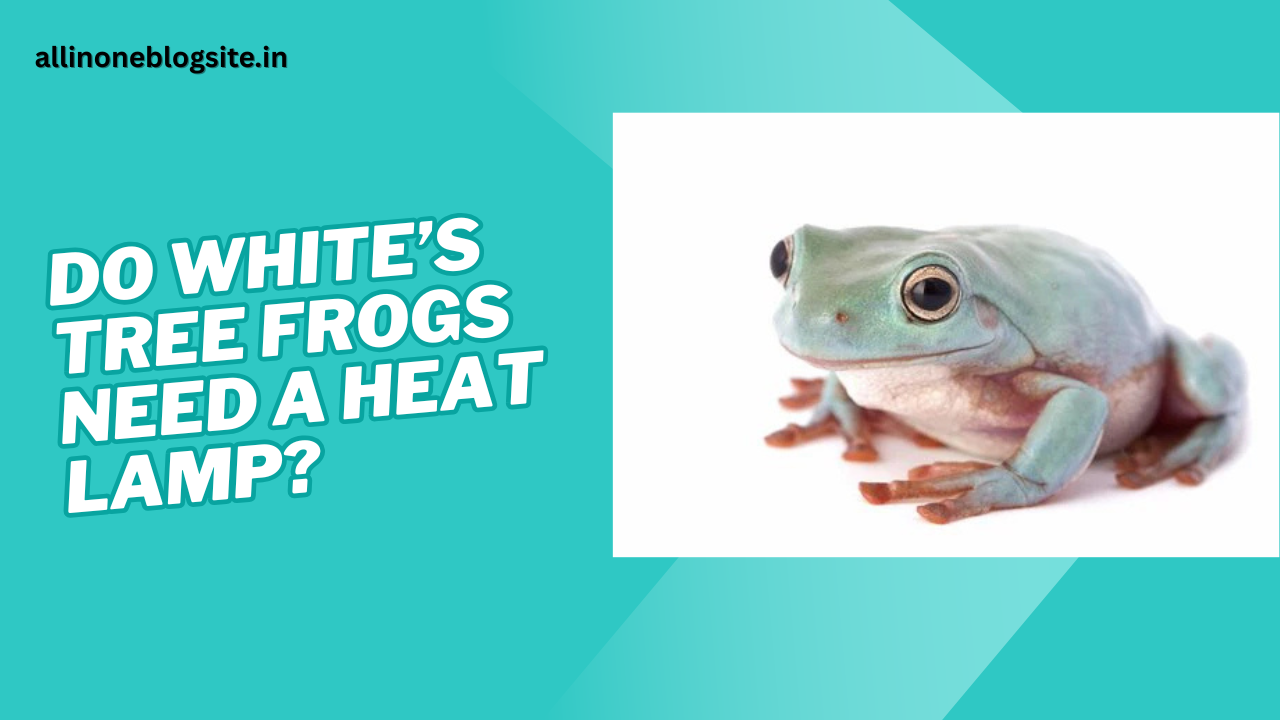
One of the most sought-after pet frogs in the world-bought for its calm, hardy nature and easygoing demeanor-another question arising regarding care is this: Do White’s tree frogs need a heat lamp?
The answer is not always so simple. It all depends on your room temperature, enclosure setup, and how you wish to provide light and heat. In this guide, we shall dive deep into everything you need to know about White’s tree frog heating and lighting, so by the end, the answer will stand clear before you-absolutely what your frog needs and how to provide it.
Introduction to White’s-Tree-Frogs
Before heat lamp discussions, let us understand the species.
- Scientific name: Ranoidea caerulea (formerly Litoria caerulea)
- Common names: White’s tree frog, dumpy tree frog, Australian green tree frog
- Native habitat: Australia, Indonesia, and Papua New Guinea
- Size: 3–5 inches on average
- Lifespan: Possibly 15–20 years when given proper care
- Nature: Calm, allows handling, less prone to stress than many species of frogs
These frogs come from warm, humid environments. In the wild, they climb trees, rest in plants, and sometimes enter houses. Their native climate plays a big role in their heating needs in captivity.
Why Temperature Is Important
Like all amphibians, White’s Tree frogs are ectothermic; hence they are not able to maintain a stable body temperature inside their body. They rather depend upon the temperature of the surroundings.
If it is too cold in an enclosure, then:
- Digestion gets slowed down
- Immunity will get weaker
- Activity will be less
- Illness will have a higher chance of occurrence
If the temperature is too hot:
- Strain gets imposed on the animal
- It loses water through dehydration
- If it is for an extended period, it can kill the frog
Hence, the right temperature needs to be maintained.
Ideal Temperature Range
There are sets of temperature ranges all agreed upon by experts and experienced keepers:
- Daytime: 75–85°F (24–29°C)
- Basking spot (optional): Up to 88°F (31°C), but not hotter
- Nighttime: 65–75°F (18–24°C)
This range allows your frog to move between warmer and cooler areas to self-regulate.
Do White Tree Frogs Need a Heat Lamp?
Now let us get down to it. The short answer: sometimes yes, sometimes no.
- If the environment stays above 72°F most of the year, you might not need a heat lamp.
- If your home temperature drops often below 70°F, especially at night, a heat source shall be required.
- A heat lamp is also beneficial in establishing a day and night cycle as well as a natural gradient within the enclosure.
So, not all keepers need it, but many will benefit from having a decent, safe heating option at hand.
Different Sources of Heat
Frog enclosures can be heated in many ways, each having installed viewing points.
1. Heat lamp
- Warmth from above
- Mimic sunlight
- Basking spot if needed
- Might dry out enclosure if too strong
Best: for daylight gradient and visible light cycle.
2. Ceramic Heat Emitters (CHEs)
- No light, only heat
- Daytime and nighttime use with no disturbed sleep
- Usually, used with UVB or LED lights
Best: provide night heating or heating for rooms that turn cold at night.
3. Deep-Heat Projectors (DHPs)
- Newer technology
- Emit infrared-A and infrared-B bands of infrared light
- Produce deep, natural heat like sun-rays
- Consumes less power than CHE
Best for: steady heating that does not disrupt the circadian rhythm of animals.
4. Under-Tank Heaters or Heat Pads
- Heat from below
- Not favorable for arboreal species like the White’s tree frog
- Can dry out the substrate
Basically not recommended except when paired with other sources.
Lighting Needs: UVB or Not?
Another very common debate: Do White’s tree frogs require UVB light?
- Some say it is not needed because frogs can make it by without it.
- Some say it is needed, however low levels, to maintain health, activity, and production of vitamin D3.
Studies suggest that while exposure to UVB is not absolutely necessary for survival, it does better the long-term quality of life.
If providing UVB:
- Use low-output bulbs in the 2–5% range
- Place above a mesh lid
- Provide shaded areas for frogs to retreat away from the light source
The Complete Setup of the Enclosure
Just one step in frog care. Let’s check the full enclosure.
Tank size
- Minimum: 18x18x24 inches for 1-2 frogs
- More size always equals better
- Vertical space is important due to climbing behavior
Substrate
- Coir, sphagnum moss, or possibly bioactive soil
- Holds moisture but refuses to hang onto water
Furnishings
- Branches for climbing
- Live or artificial plants for cover
- Cork bark and hides for security
Water
- Large shallow water dish
- De-chlorinated water
- Changed daily
Humidity
- Ideal: 50-70%
- Mist once or twice a day
- Use a hygrometer to monitor
Heating Setup Examples
Safe and workable examples would look like this:
Setup 1: Heat Lamp + UVB
- Very low wattage heat lamp to provide warmth during the day
- 5% UVB tube of light
- No heat during the night if room stays warm enough
Setup 2: Ceramic Heat Emitter + UVB
- CHE for the warmth during day and night
- UVB tube or LED light for light
- This one works well in colder homes
Setup 3: Deep Heat Projector + Plant Light
- DHP for even heat
- LED plant light for brightness
- UVB could be there but is more optional
Monitoring Temperature
Always use devices to measure the conditions. Being in the dark could hurt your frog.
- A digital thermometer: place it at the warm and cool sides
- Laser thermometer: Used to spot check on surfaces
- Thermostat: connects to heat source for safety
Common Heating Mistakes
Many first-time keepers make mistakes. Avoid these:
- Using heat fixtures that are too hot
- Not creating a temperature gradient
- Not checking for night temperatures
- Using heat mats only
- Placing the lamps inside the tank (risk of burns)
Seasonal Adjustments
Summer season:
- If the house is warm, you may not need extra heat.
- Always watch out for overheating, particularly near windows.
Winter time:
- Night times are usually too cool in most houses.
- A CHE or DHP is needed to maintain stable temperatures.
Feeding and Temperature Relationship
Temperature affects digestion. At correct temperatures:
- Frogs have regular feeding times.
- Food is properly digested.
- Growth and health are enhanced.
When it is too cold:
- Food will rot in the stomach.
- Appetite decreases.
- Metabolism slows down.
Handling and Stress
White’s tree frog does tolerate gentle handling, but keep the following in mind:
- Wash your hands before and after handling
- Rinse off first if you have chemicals or soap on your hands
- Keep handling sessions very short
- Avoid handling after applying lotion or bug spray
Temperature-Linked Health Issues
Improper heating could give rise to:
- Respiratory infections
- Loss of appetite
- Weight loss
- Stress-related ailments
Changing the environment usually brings quick improvements to health.
Is a Heat Lamp Necessary for the Babies?
Young frogs are more sensitive to cold. Best to supply:
- Stable temps somewhere between 75 and 80°F
- Gentle heating rather than strong lamps
- Humid-but-not-overheated conditions
Day and Night Cycle
The frogs are on circadian rhythms. To mimic nature:
- Use 12 hours of light and 12 hours of darkness
- Use timers for consistency
- Use no-bright lights at night
Conclusion
So, in essence: do White’s tree frogs need a heat lamp? The answer might rest on the setup and home temperature. Sometimes it does not have to be there, but very often, a heat lamp or other safe manner of heating offers very positive effects on health and activity. The important thing is the balance: not too hot, not too cold, with a natural gradient and proper humidity.
With the right care, your White’s tree frog can retain long, healthy, and active years of life in its glow. Heating and lighting might have seemed complex at the start, but once you have an idea about the basics, it’s quite easy to handle.
More FAQs About Heating and Care for White’s Tree Frog
1. Can I use my household bulb rather than a reptile heat lamp?
You can use a household incandescent bulb of low wattage for heat as far as safe temperatures are provided. The better option will be a reptile heat bulb since it is designed for consistent temperature output and can be safely used within an enclosure.
2. Do they like to stay warm or cool inside their tanks?
Frogs like both. They move between basking areas that are warm and shaded spots that are cooler. This is why it is important to create a temperature gradient.
3. Does a heat lamp make the frog to come alive during the day?
Not quite. Being nocturnal, they have calming resting hours during the day. A proper heating mechanism would ensure good metabolism, which in turn would assist in maintaining their activity at night.
4. Do heat lamps harm live plants inside the enclosure?
Strong heat lamps put too close will dry or burn the plants. Usually, the use of a lamp with a lower-wattage bulb, or simply raising the lamp higher, should prevent this.
5. How far must the heat lamp be from the frog?
Keep it outside the enclosure floor and about 6 to 8 inches far from where the frog can reach; that way, it will not burn and will keep safe temperature.
6. Do heat lamps alter the humidity?
Heat lamps tend to dry up the air, so they lower humidity. This is why misting and using a substrate that holds moisture are so important when using lamps.
7. Is it possible to heat the entire room and make the enclosure warm by it instead?
Yes, many keepers heat the frog room instead of using lamps. This works only if the room temperature remains stable and within a safe range for the frogs.
8. When is it alright to turn off the heat in the summer?
If your house stays naturally within the proper temperature range (i.e., warm during the day at 75–85°F while above 65°F at night), then there might be no need to provide additional heating during the summer.
9. Do baby frogs require more heat than adults?
Baby White’s tree frogs prefer slightly warmer and steadier temperatures, usually in the range of 78-80°F. Their tolerance of temperature drops is less than that of adults.
10. What happens if my heat lamp burns out in the night?
Your frog will be fine until morning as long as the room doesn’t drop below 65°F. However, it’s always a good idea to have a backup bulb or a backup heating method ready to go.