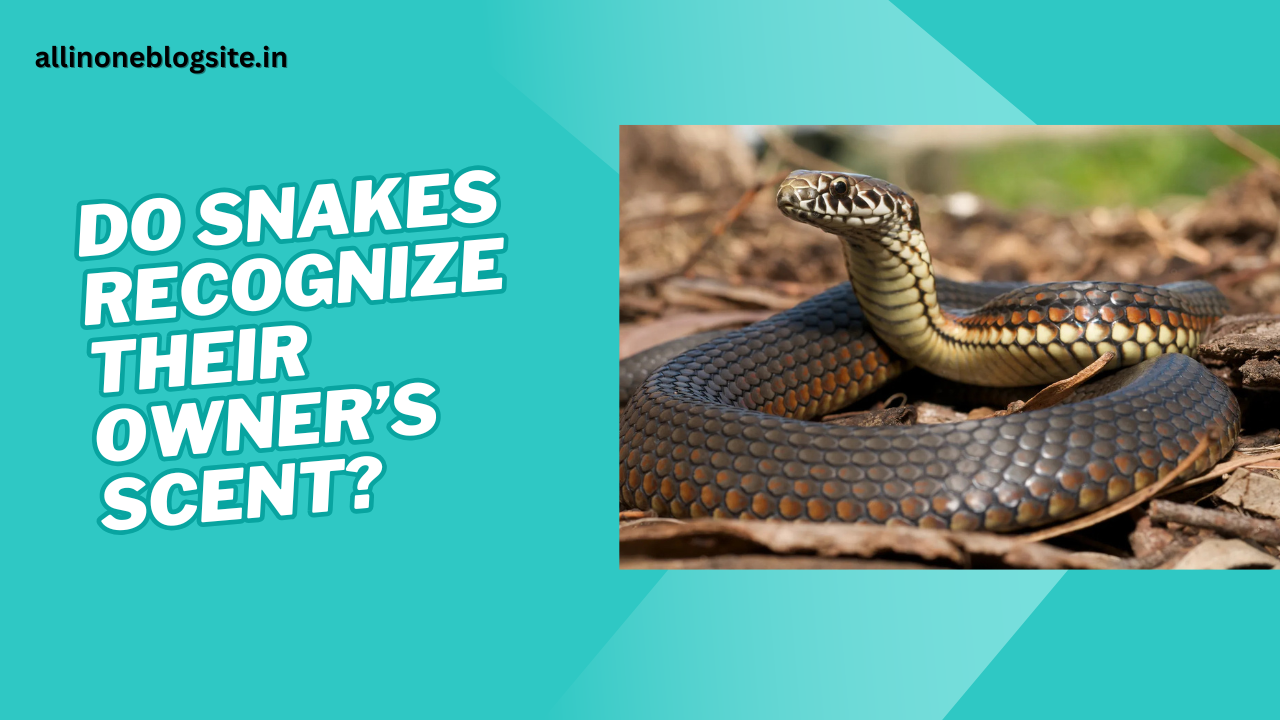
Snakes are one of the most mysterious and enigmatic creatures in nature. Their almost imperceptible movements, lack of overt feelings, and the main way of ‘talking’ through gestures and body postures make them hard to understand. A big question in the minds of many snake pet owners’ is whether their snakes have any idea of who they are, or if the only way to tell is by recognizing the owner’s smell. In this comprehensive article, we will get to the bottom of snake scent recognition, examine how their olfactory system operates, and share what studies and everyday experiences point to regarding their capability of recognizing people they have met. We’ll also be alerting you to behavioral signs, dispelling myths, and giving you care hints that will help you bond with your reptile friend. The conversation in this article is a blend of academic info, professional viewpoints, and hands-on care tips — all packaged in simple, clear language for smooth comprehension.
1. Introduction: Why This Question Matters
Having a pet snake you might experience that it behaves differently around you than with other people. Some snake keepers report their snakes to be calmer during their presence. This brings the question—do snakes actually recognize their owner’s scent? Knowing this helps the reptile owners in the handling of their pets, and minimizes stress for the snake. Unlike dogs or cats, snakes do not demonstrate affection in the conventional manner. Nevertheless, their behavior is affected by odors, temperatures, and their degree of familiarity with the person.
2. How Snakes Use Their Senses
The snakes’ main senses are chemical ones, sights, or sounds are less important to them. The primary tools for sensing are:
- Smell: It is done through the flicking of the tongue and is then processed by the Jacobson’s organ.
- Vibration sensitivity: The snake can feel the movement of an object by picking up the vibrations in the ground.
- Heat detection: Certain snake species possess pits that can sense the heat emitted by their prey.
- Touch: Through their scales, snakes are able to sense the texture and changes of surface.
Each of these senses helps snakes navigate, hunt, and understand their surroundings — including recognizing potential threats or familiar beings.
3. The Science of Smell in Snakes
Snakes are the masters of smell, having one of the most highly developed olfactory systems in the animal kingdom. They literally don’t rely only on their nostrils to breathe in scents as mammals do but rather use their forked tongue to pick up the chemical particles from the air. Following is a series of steps that occurs each time a snake juts out its tongue:
- The tongue picks up the scent particles that are either in the air or on some surface.
- Then, it sends the smell particles to the Jacobson’s organ (the vomeronasal organ is another name for it).
- The chemical data is sorted out by the brain so that the snake can tell which one is prey, which one is predator, or if it’s a familiar smell.
This is a very intricate process that enables snakes to pick up even the slightest difference in their surroundings.
4. What Is the Jacobson’s Organ and How It Works
The Jacobson’s organ is a small organ located on the roof of the snake’s mouth. It is a unique structure that has the capability of detecting chemical signals that are not airborne — signals that would not be sensed by the standard noses.
- It’s of great importance in the fields of navigation, hunting, and mating.
- The snakes utilize it to locate the scent trails left by their prey or by other snakes.
- It turns the breathing process into a tasting one and gets them to know the odors that are around.
So sensitive is this organ that a snake can indicate the direction of a fragrance — to the left or to the right — depending on which forked tongue side has received the particles.
5. Can Snakes Recognize Their Owner’s Scent?
The concise answer is: yes, but not as much as we do. In fact, the snakes are able to both learn and recall familiar scents. While they might not experience feelings similar to love or attachment, they can clearly distinguish a known smell from a new one. Snake experts and owners alike have to say that the reptiles seem to be less agitated when they are in the hands of their regular caretaker. This is a hint of scent recognition and humans’ being more familiar to the snakes.
6. Evidence from Research Studies
The results of recent studies are quite amazing:
- In 2024, a study published in a science journal revealed that some snakes could identify their own smell — which can be considered as self-recognition.
- The researchers did an experiment and measured the reactions of snakes to scent samples of different categories — their own, those of other snakes, and completely strange ones.
- And the snakes did spend a longer time on the investigation of the strange scents, which indicates their ability to differentiate them.
In case the snakes do have the ability to recognize their own chemical identity, it is very likely that they can also remember the scents of humans that are frequently present and thus, easily identifiable by them.
7. Behavior Observed in Pet Snakes
Most snake owners have the same experiences:
- Their snakes act less aggressive when the owner handles them.
- They might discover less fear among the people they already know.
- They might be somewhat nervous or mildly stressed if a stranger is handling them or near them.
Although these behaviors don’t necessarily indicate emotional bonding, they do reflect recognition through familiarity.
8. How Familiar Scents Affect Snake Behavior
The snakes are so much reliant on scents that they would choose a scent as a signal of comfort and safety. Thus, the moment they realize that a certain smell is that of a familiar person, the following may happen:
- They might keep their body relaxed instead of being tenser.
- They might flick their tongue at a slower rate.
- They might tolerate a gentle touch without making an effort to escape.
Familiarity indeed minimizes stress since the snake’s brain connects the scent to a safe place or a non-threatening being.
9. The Difference Between Recognition and Emotion
It is very important to clarify that recognition is not the same as emotion. Reptiles and other non-placental mammals do not experience love as we do. The fact that your snake behaves relaxed around you does not imply that it “loves” you. Instead, it means that the snake has recognized your scent as safe and non-threatening.
10. Myths Related to Snake Intelligence and Love
The most common myths concerning snakes are:
- “Snakes care about their owners.”
- “Snakes have short memories.”
- “Snakes are inherently aggressive.”
The real situation is:
- Snakes are not emotional creatures, but they do learn to handle tolerantly.
- They possess a remarkable olfactory memory, which allows them to discern usual patterns.
- Fear usually leads to aggression, not hatred.
11. Do All Snake Species React in the Same Manner?
Not at all. There are different temperaments and different sensory strengths among the various species. For instance:
- Ball pythons are very calm and easily get used to handling.
- Corn snakes are inquisitive and attentive to getting their noses around familiar scents.
- King snakes are active and may need more time to acclimatize.
A non-venomous or wild snake, on the other hand, remains a defensive creature no matter how much it gets acquainted with a person or a place.
12. Is it Possible to Train a Snake to Become Tolerant of You?
Training a snake in the conventional manner is not possible; however, the snake can be taught to accept human presence. The following are some suggestions:
- Do regular gentle handling of your snake.
- Clean your hands to get rid of the smells that are not yours.
- Use the same routine and voice.
- No sudden movements or loud noises.
Eventually, the snake will link your scent and behavior with security.
13. Snake Handling: Safety and Familiarity
Safe handling is a means of establishing both trust and recognition. The following are the steps to take:
- Approach your snake slowly and with confidence.
- When lifting it up, fully support its body.
- Do not suddenly grab its head or tail.
- If your snake is a new one or is in shedding, limit the time of handling.
- Very gently put it back in its home.
Each session will make the memory of your snake getting your scent and touch stronger.
14. Signs Your Snake Is Comfortable Around You
An at ease snake would:
- Show slow and relaxed movements even when handled.
- Use its tongue very slowly as a means of exploring.
- Place itself unrestrained in the palm of your hands.
- Continue eating as usual even during and after the handling sessions.
Snakes show their discomfort through rapid tongue flicking, hissing, or trying to escape.
15. What If Your Snake Seems Scared or Defensive?
In the case where your snake does not respond well:
- Let it take its time to settle down.
- Never push for handling.
- Adjust the environmental factors such as temperature or light.
- Introduce your smell by putting a piece of your clothing close to the snake’s cage.
The snake’s comfort will be restored through the gradual reintroduction process.
16. Common Mistakes Owners Make When Handling Snakes
Don’t these mistakes be your own:
- Touching the snake immediately after feeding.
- Generating noise close to the snake’s home.
- Suye periods.
- Touching with the application of perfumed lotions or perfumes.
Snakes can be driven away by powerful or strange odors, which can cause the snake to go back to the start as far as its comfort level is concerned.
17. Importance of Routine and Environment
Snakes like stability. They are more comfortable with constant:
- Temperature
- Light
- Food schedule
- Interaction patterns
When everything else remains unchanged, your smell becomes part of the environment, a signal of safety.
18. Do Snakes Remember Scents Over Time?
Research indicates that snakes possess long-lasting scent memory. They can track the scent of their prey or recognize their territory even after some weeks. For snakes kept as pets, this means:
- They can identify your scent during the intervals between handling.
- They might be friendly even after days of no communication.
Nonetheless, stress or sickness might cause them to lose the memory of familiar hints for a short time.
19. Understanding Snake Body Language
Without any facial expressions, snakes have to rely on body language, which is very important:
- Loose coils = peaceful attitude.
- Tight body or S-shaped neck = threat responsive.
- Slow tongue flicks = near to relaxing & gentle curiosity.
- Rapid flicks = being alert or little stressed.
If you know how to interpret these signs, you will be able to tell the feelings of your snake when you are with him/her.
20. Comparison With Other Reptiles and Pets
On the other hand, snakes are still more solitary than lizards or turtles.
- Lizards might recognize the owners through sight.
- Turtles could react to voice and feeding schedules.
- Snakes largely rely on smell and touch.
In this regard, they cannot “know” you like mammals but they can still separate your scent from the rest.
21. Scientific Insights: Chemical Recognition in Reptiles
Chemicals are the main mode of communication among reptiles for mating, hunting, and territory identifying. These include pheromones and scents picked up from the surrounding environment. Snakes leave scent trails to:
- Distinguish other snakes by their sex, same or opposite.
- Track down the prey even at huge distances.
- Sense the presence of predator or unsafe areas.
This skill also naturally allows them to recognize human beings as safe or familiar.
22. Can a Snake Recognize Its Own Scent?
A new study has shown that some snake species can smell themselves, and thus, identify their own scent. They would have a shorter exploration of their own scent and a longer stay on the new ones. This is indeed a discovery that reveals a higher level of sensory intelligence than believed previously. It also confirms the notion that the snakes are able to tell apart not just the individual scents but also that of the owner.
23. Snake Emotions: What Science Says
Snakes do not go through a range of feelings and emotions as humans do, like love and sadness, but they do have a sort of a feeling spectrum that includes stress, comfort, curiosity, and fear. One of the signs of comfort among snakes is the recognition of each other — when they encounter a familiar smell, their anxiety decreases. In this way, they might not be attached to you like a human would, but they would still consider you as a source of security.
24. How Smell Plays a Role in Hunting and Navigation
The role of smell in a snake’s life is so important that it is regarded as their primary sense:
- It helps them follow the footprints of their prey.
- It assists them in locating potential partners.
- They can be back to their dens or hiding places.
Such great scent memory explains why your reptile pet can recognize your being in the same room even when it does not see you.
25. Practical Tips for Pet Snake Care and Familiarization
If you want to create a good relationship:
- Schedule the handling of your snake at the same time every day.
- Keep your scent the same (no strong perfume).
- Provide food regularly and clean the accommodation.
- Use a soft voice and take it slowly during interaction.
By these habits, your pet snake will learn to regard you as a source of calmness and safety.
26. Frequently Asked Questions
Q1: Can my snake love me?
Absolutely not! Snakes may never become emotionally attached to you but might rather be good-natured and tolerant as they get used to your presence.
Q2: Do snakes get attached to humans?
Not emotionally, but they will always retain their memory of humans through their scents and behaviors.
Q3: How do I know if my snake recognizes me?
If your snake is calm, slowly flicks its tongue, and stays out of hiding when you come nearby, it most probably recognizes your scent.
Q4: Can snakes tell family members apart?
Yes, they can identify people by their unique body smells and might show different reactions to each one.
Q5: How long does it take for a snake to recognize its owner?
Typically it takes a few weeks of regular handling and exposure.
Final Word
Indeed, snakes are able to identify their owner’s smell – not by emotion but by science and behavior. This is a very delicate bond that is formed through daily interactions, safety, and consistency. If handled well, your snake will not only see (or rather smell) you as part of the safe environment.
Also Read: How Long Can a Squirrel Live Trapped in a Wall?.