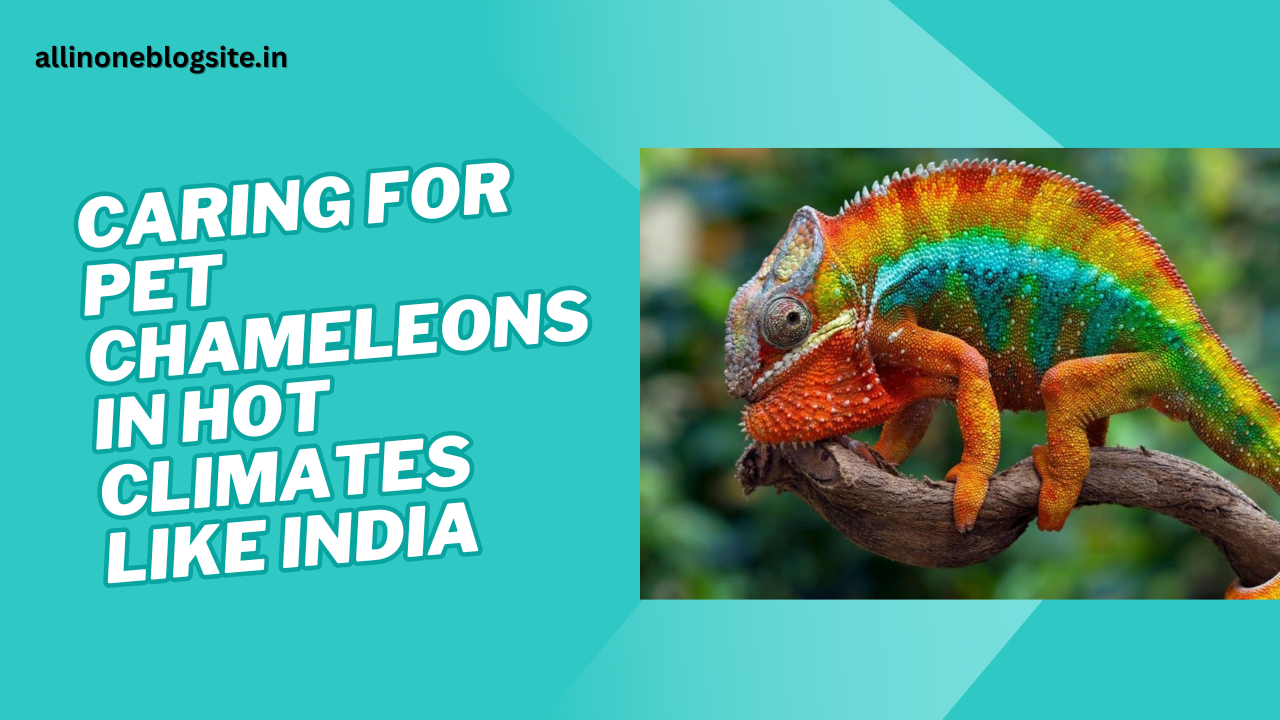
Having a chameleon for a pet is an amazing adventure, but it also has its responsibilities. Sensitive reptiles like these depend on their environment for comfort, health, and even life. If you live in hot areas such as India, you must learn the right way of bringing together heat, humidity, and environment if you want to take care of them. This comprehensive guide will teach you everything about chameleons, from selecting the right species to diet, habitat, lighting, and long-term health maintenance.
Chameleons are the most popular and sought-after reptiles among those who want to keep a pet that is different and exotic. It’s just the fact that these reptiles are more demanding than any other pet. However, chameleons are not for everybody. They require special care because they are tree-dwelling reptiles and one of the few that are difficult to breed in captivity.
- Color Change: Communication, mood, and temperature control, not just camouflage, are some of the uses of color change.
- Independent Eyes: A field of vision of 360 degrees is offered since each eye has its own movement.
- Sticky Tongue: To capture prey, they can extend their tongue longer than their body.
- Prehensile Tail: A climbing and balancing aid, it operates like a fifth limb.
Chameleons are generally solitary animals. They are solitary animals that prefer to live alone and become stressed in groups.
2. Selecting The Proper Species For Indian Hot Weather
India being the hot and humid country its tropical and semi-arid climate requires the use of species that can put up with high temperatures and at the same time be able to adapt to the changing mood of humidity.
Widely-used Pet Species
1. Veiled Chameleon (Chamaeleo calyptratus)
- Hearty and versatile.
- Survives the higher temperatures.
- Provided with proper care will be a pet easily managed by beginners.
2. Panther Chameleon (Furcifer pardalis)
- Beautiful colors and an easy-going character.
- Moderate humidity is his fave.
- Temperature control must be very well done all the time.
3. Jackson’s Chameleon (Trioceros jacksonii)
- Can be recognized by tiny horns on the forehead.
- Colder temps are a must for him versus the rest of the species.
- Need to pay more attention during Indian summers.
Select your species in accordance with the prevailing conditions of your region and your proficiency in managing the indoor climatic aspect.
3. Creating The Ideal Chameleon Habitat
The habitat for a chameleon should look like the natural forest of the animal. To balance the heat, airflow, and moisture in the hot climate of India is the very essential and difficult operation.
Type of Cage
- Cages that are tall and have mesh sides should be favored over glass aquariums.
- Mesh gives a free flow of air and no accumulation of heat.
- The minimum height of the cage should be 3 feet which will allow the chameleon to have its climbing exercise freely.
Placement
- The cage should be kept indoors but close to areas receiving natural light.
- Direct sunlight should be avoided and windows should not be opened during hot afternoons.
- The cage should be raised to eye level or above; chameleons are more comfortable when they are up there.
Essential Features
- Branches and vines: To climb and for exercise.
- Plants: Such as pothos, hibiscus, and schefflera, giving shade and humidifying the environment.
- Perches: At various heights allowing proper temperature regulation.
4. Temperature and Lighting Control
Chameleons in India often find the temperature exceeds beyond their maximum limits. Heatscare management keeps them healthy.
Ideal Temperature Range
| Species | Day Temperature | Basking Spot | Night Drop |
|---|---|---|---|
| Veiled | 84–92°F | 95–100°F | 75–80°F |
| Panther | 75–85°F | 90–95°F | 70–75°F |
| Jackson’s | 70–80°F | 85–88°F | 65–70°F |
Tips for Indian Owners:
- Cages should not be set up next to walls that are illuminated by direct afternoon sunlight.
- Air coolers or fans can be used in the vicinity, but not blowing straight into the cage.
- During the summers, the air-conditioned room should be kept between 27°C–30°C.
UVB Lighting
For synthesizing Vitamin D3, which in turn helps with the absorption of calcium, chameleons rely on UVB light. Metabolic bone disease is the consequence of their not receiving this light.
- Reptile UVB bulbs are the only ones that perfectly suit chameleons.
- These bulbs should be replaced after 6 to 8 months.
- Mount the lamp at a distance of 8 to 10 inches from the basking branch.
- Make sure glass or plastic does not prevent the UV rays from reaching the reptiles.
Basking Lights
- For basking, you should use a low-wattage bulb (40–60W).
- Set a warm side and a cool side in the cage.
- Do not use “hot rocks” — they can burn your pet.
5. Managing Humidity and Water
The dry climates of India may lead to dehydration, while the coastal areas may have too much humidity. Extreme ends are harmful.
Humidity Level
- Keep 50–70% humidity for most species.
- Install automatic misting systems or drip setups.
- If humidity drops, spray the plants two or three times a day.
Water Source
Chameleons avoid drinking from water bowls; they prefer the taste of running water.
- Set up a drip system to imitate raindrops on the leaves.
- Mist the cage at dawn and dusk.
- Avoid using pumps that might lead to waste and bacteria accumulation.
- Refresh the water every day.
Dehydration can manifest as:
- Dimpling in the eye area.
- Inactivity.
- No food intake.
If you observe these symptoms, then increase misting and seek a veterinarian for reptiles.
6. Substrate and Hygiene
An unpolluted setting is a barrier for infections and parasites.
Best Substrate Choices
- Newspaper or reptile carpet.
- Butcher paper or unpolluted soil (no fertilizers).
- Sand, wood shavings, or bark are the bad ones — they keep moisture and might be ingested by accident.
Cleaning Steps
- Throw away leftovers of insects each day.
- Clean broad branches and cage walls each week.
- Total cleansing every other week with the use of gentle soap or diluted bleach solution (1 cap in 1 gallon water).
- Make sure it’s completely dry before returning your chameleon.
7. Nutrition and Feeding in Warm Weather
A varied diet is the root of strong immunity and the bright colors of the animal.
Insect Diet
Chameleons are insectivores. The best way to keep their nutritional requirements balanced is to offer diverse insects:
- Crickets
- Roaches
- Mealworms
- Silkworms
- Hornworms
- Grasshoppers
Do not use insects from gardens or outdoors — they might have pesticides or parasites.
Gut Loading
Prior to offering them to your chameleon, make sure to feed the insects with some good-for-them-food:
- Carrots, spinach, or sweet potatoes.
- Oats or rice cereals.
- A piece of fruit like an apple or orange.
This procedure will enrich your kid’s diet with vitamins and minerals.
Supplementation
- Calcium (without D3): 2–3 times weekly.
- Multivitamin: Once weekly.
- Before feeding, dust the insects lightly with the supplements.
Feeding Frequency
- Juveniles: Daily.
- Adults: Every 2 days.
- After feeding, remove the leftover insects.
8. Handling and Behavior
Chameleons are very timid creatures and thus prefer to have as little contact as possible.
Handling Tips
- Do not handle the pet very often.
- Do not pull or grab them from trees or plants.
- Allow the pet to come to your hand when it is ready.
- Do not hold it by its tail.
The stress caused by frequent handling will negatively impact their appetite and weaken their immune system.
Common Behaviors
- Changing color: A way to show the temperature, mood, or communication.
- Puffing up: A sign of fear or defense.
- Hiding: Sign of needing privacy or rest.
9. Health and Common Diseases
Problems in health may come up even when there is proper care. It is good to know the early signs as they help to solve the problem before it gets bigger.
Common Issues
- Dehydration: caused by low humidity.
- Respiratory Infections: due to inadequate ventilation or by cold drafts.
- Metabolic Bone Disease: results from a shortage of UVB or calcium.
- Parasites: come from unclean places or from getting bitten by infected insects.
- Retained Shed: happens when the humidity is below the required level.
Symptoms to Watch
- Weakness in the limbs or softness of the jaw.
- Not eating.
- Climbing becoming difficult.
- Mucus forming around nose or mouth.
- Swelling or change in color.
Veterinary Care
- Annual health check-ups are a must.
- Fecal tests are done to find out if there are parasites.
- Always consult a vet with experience in reptiles for any kind of sickness. Do not try home remedies or give random medications.
10. Breeding and Egg Care (Optional for Pet Owners)
If a female chameleon is kept, she can still lay eggs even though she has not been mated.
Laying Setup
- A laying bin filled with damp sand and soil should be provided.
- The depth should be 8–10 inches.
- if you do not intend to incubate, then after laying, remove the eggs.
Do not disturb the female during this time; stress might lead to egg binding which is a life-threatening condition.
11. Seasonal Adjustments in India
The seasons of India have a direct effect on the health of your chameleon.
Summer (March–June)
- Place cages in rooms that are cool.
- Increase the frequency of misting.
- Offer shade and airflow.
Monsoon (July–September)
- Humidity should be monitored very carefully; too much humidity can lead to fungus or respiratory illness.
- Decrease the misting if the natural humidity is high.
- Good ventilation should be ensured.
Winter (October–February)
- Night-time heating should be gentle (red or ceramic bulbs).
- Cool drafts should be avoided.
- Humidity should be maintained with light misting.
12. Costs and Long-Term Commitment
Chameleons are a long-term commitment.
Initial Setup
- The cost of enclosure and equipment is between ₹25,000 and ₹40,000.
- Lighting and misting system will cost around ₹8,000–₹15,000.
- Plants, branches, and decor will range from ₹5,000 to ₹10,000.
Monthly Costs
- Buying insects and feeding will cost ₹1,500–₹3,000.
- Supplements and cleaning will be ₹500–₹1,000.
- Annual vet visits may cost ₹2,000–₹5,000.
The lifespan of chameleons is typically between 5 and 8 years, thus it is advisable to plan accordingly.
13. Safety and Hygiene
Bacteria like salmonella can be found in unhealthy reptiles as well.
Safety Steps
- Always wash your hands after you have held your chameleon or after you have cleaned the cage.
- Make sure that children and immunocompromised persons are always cautious.
- Do not allow the chameleon to wander around unattended.
14. Tips for New Owners
- Be sure to research before you buy and never adopt on the spur of the moment.
- Begin with tough species like Veiled Chameleons.
- Feeding and cleaning must be done according to a definite schedule.
- Behavior should be observed daily — even small changes can indicate big problems.
- The habitat should be kept the same; sudden changes make them nervous.
15. Key Takeaways
- Chameleons are not the type of pets that require very little maintenance.
- They are the ones who need the right temperature, humidity, and UVB light.
- The Indian environment is such that it necessitates the control of temperature.
- The combination of maintaining proper hydration, dietary needs, and hygiene helps in preventing sickness.
- Patience and care may lead them to produce beautiful lives for many years.
Final Words
Caring for a chameleon in India can be tough but it is also a great source of satisfaction. Once the reptiles’ habitat and feeding are right, they will not only show off their stunning colors and calm but also their charm, which is much more than that of other pets. If you know their natural habits and needs you give them a safe and healthy life — and in exchange, they will show you a little bit of the wild in your home.
Frequently Asked Questions
1. A chameleon can survive Indian summers without ac and still be happy?
YES, but if you control the room’s temp precisely. Position the cage in a shaded spot with proper ventilation. Fans can be used indirectly to lower the temperature. The cage should not be under the direct sun. A small cooler or a misting system can assist in maintaining the temperatures at safe limits.
2. Is it possible to keep a chameleon outside in India?
Regions will dictate the answer. In moderate areas where the temperature is below 35°C, and there is low pollution, short outdoor exposure under supervision is all right. However, heat, wind, and dust will definitely harm them if they are exposed for a long time. Always make sure to provide shade and fresh water if a short outdoor stay is unavoidable.
3. Can Indian tap water be used for misting or drinking?
Many Indian cities’ tap water is either heavily mineralized or has chlorine in it. It is better to use filtered or dechlorinated water for misting and drip systems. Hard water will leave white spots on the leaves, and your enclosure’s water quality will deteriorate due to hard water.
4. What overheating signs can be observed in a chameleon?
When a chameleon is overheated, it might exhibit some of the following signs: it may open its mouth for cooling, seek down the branches to cooler areas, or show agitation. Its colors may change to darker and the rate of breathing might increase. If you notice these signs, do a light misting of the cage and turn off the heat source immediately.
5. Is it safe for a chameleon to eat Indian household insects such as houseflies or ants?
No, it is not advisable to feed random insects from your surroundings. Insects from Indian households may come with pesticides, pollution, or parasites. Always get feeder insects from reliable reptile suppliers or breed your own at home on clean feed.
6. How to maintain humidity in the cage during dry Indian winters?
The best way to humidify the cage is the natural way—putting live plants like pothos or hibiscus in the cage would naturally increase humidity to a great extent. You can also use a humidifier or a misting system set on a timer. A thin plastic sheet can be used to cover one side of the enclosure to trap moisture while still allowing adequate airflow.
7. Monsoon season is when my chameleon won’t eat, what to do?
Monsoon season can make it hard for chameleons to eat due to changes in humidity and temperature. Always ensure the cage is well-ventilated and relatively dry. Present insects that are alive in the morning when the temperatures are not very high. If your chameleon still refuses to eat after a week, take it to a reptile veterinarian.
8. Is it possible for a chameleon to tell its owner apart?
Chameleons do not develop emotional attachment like dogs or cats. However, they can identify the people and things in their environment by observing the routines and visual cues. Gradually they can be less skittish around the person who offers food or handles them with care. Trust is established through being consistent.
9. Is it allowed to take a pet chameleon on a trip to India?
Yes, but the journey has to be properly organized. A ventilated box with branches inside for climbing is the best option for transport. Make sure the temperature is right and keep your pet away from noise and vibration. Make sure to stop every now and then in order to spray the box with water. Avoid traveling long distances when it is extremely hot.
10. What are the biggest mistakes new chameleon owners in India make?
Common mistakes include:
- Using glass tanks with poor airflow.
- Ignoring humidity control.
- Feeding only one type of insect.
- Placing cages under direct sunlight.
- Forgetting UVB light replacement.
Avoid these to ensure your chameleon lives a healthy and stress-free life.
Also Read: Which Plants Are Safe for Pet Geckos in India?.