Introduction
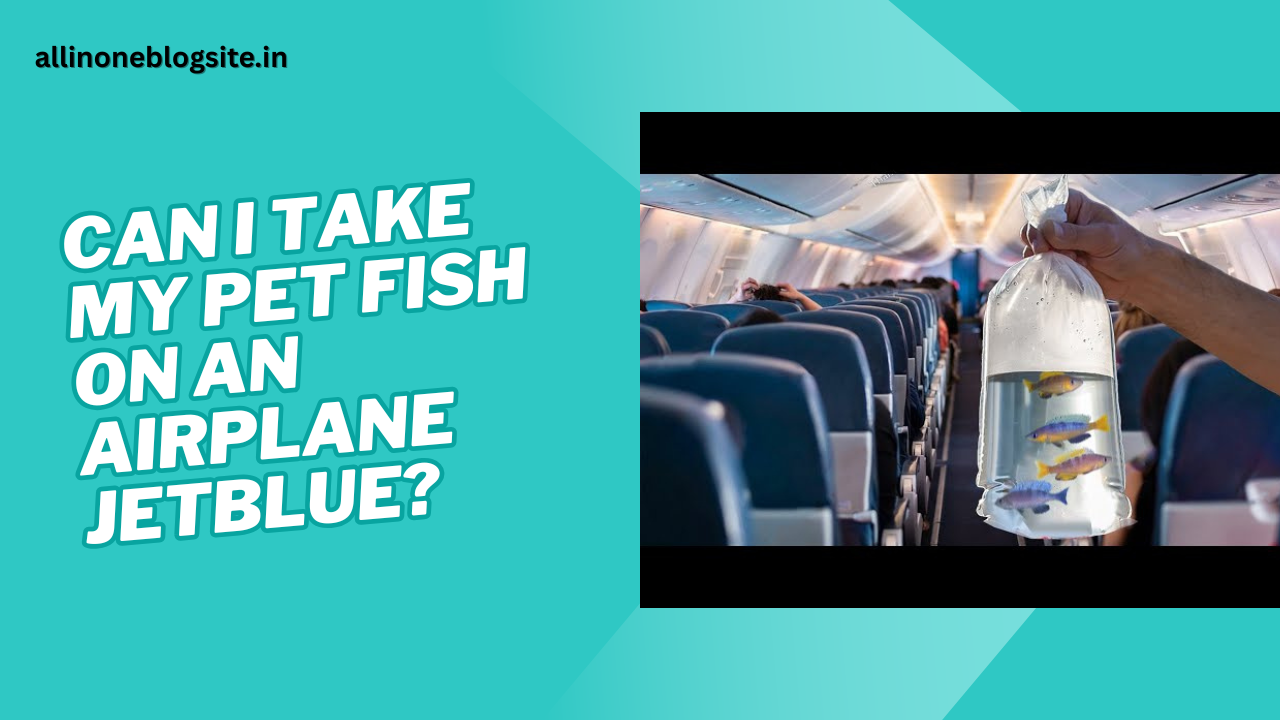
Taking pets along for the trip can sometimes be a hassle, and it gets worse when the pet is a fish. Although the situation with dogs and cats is different and they are happy to go along, there are still a lot of fish owners who are not sure if flying is an option for their aquatic pets. A comprehensive guide comes to help if you are going to travel with JetBlue and are not sure about taking your pet fish with you. This article will briefly discuss JetBlue’s pet policy, what the Transportation Security Administration (TSA) has to say about carrying live fish, how you can get your fish ready for air travel, and more. We will also give you useful tips on packing, docs, and fish safety – in short, all you need to know before boarding.
Understanding JetBlue’s Pet Policy
Though JetBlue is among the most pet-friendly airlines in the United States, its policy is still strict. The airline permits small dogs and cats to travel in the cabin but does not include fish under the regular pet policy.
JetBlue Pet Travel Basics
- Allowed Pets: Just small cats and dogs.
- Travel Type: In-cabin only (no pets in luggage).
- Maximum Weight: 20 lbs (including carrier).
- Pet Fee: Approximately $125 for every flight segment.
- Carrier Requirements: It must be under the seat.
Then, What About Fish?
Fish remain absent from the list of pets mentioned in the JetBlue policy that can travel in the cabin. But this does not mean it is not possible. Non-standard pets like fish are subject to the same TSA and Department of Transportation (DOT) guidelines that the airlines depend on. So, your right to take fish depends on:
- TSA regulations regarding liquids and living creatures.
- Screening at the security checkpoint.
- Approval from the crew and airline at check-in.
TSA Rules for Carrying Live Fish
For carrying live fish, the TSA has laid down explicit guidelines. According to their official website, live fish are allowed through the security checkpoint, but they must meet specific conditions.
TSA Live Fish Regulations
- Container Type: It should be a clear, leak-proof container.
- Water Condition: Water should look clean.
- Inspection Procedure: TSA staff check the container by sight.
- Further Screening: Maybe the fish may go through more screening steps and the container checked more thoroughly for safety before the fish is let through.
Key TSA Clarifications
- TSA agents have a lot of power. If the container spills, is too big, or is a risk in any way, you are possibly not going to be allowed to take it through.
- The inspection of containers is usually done by hand; the X-ray machine is not involved.
- The decision of the airline is still paramount — it is only the security aspect that is covered by TSA.
So, technically, TSA permits you to carry live fish through the checkpoint. But JetBlue must also give its approval for you to take them on board.
Does JetBlue Allow Live Fish in the Cabin?
Although JetBlue’s standard pet policy does not include fish among the eligible pets, the occasional traveler has managed to sneak a small fish in the plane often after prior notification and approval from JetBlue’s customer service.
Steps to Confirm with JetBlue
- Connect with JetBlue Support: Call at least a week before your flight.
- Inquire About Exceptions: Clarify that you are going to bring a live fish in a sealed container.
- Get Approval in Writing: Always obtain the permission in writing or via email.
- Present the Permit at the Airport: Have the copies of emails or the written confirmation from JetBlue along with you.
Possible Outcomes
- The case may be that some JetBlue staff will allow fish as carry-on if it meets TSA standards and can safely be placed under the seat.
- While others will refuse boarding if they view it as a breach of the pet policy.
Since it is a matter of discretion, always double-check beforehand and be informed before you travel.
How to Properly Pack Your Fish for Air Travel
If the airline allows traveling with fish, then the process of flying them will be very careful. Fish are very sensitive and their whole life cycle is very different from mammals. Therefore, they can be very easily stressed during the flight and harmed by either temperature or movement.
- A Sturdy Container is a Must
- Opt for a transparent, leak-proof plastic or acrylic container.
- Don’t use glass tanks; they are heavy and easily breakable.
- The lid must be sealed but still permit minimal air exchange.
- Clean Water is A Must
- Use clean, dechlorinated, and temperature-stable water.
- Don’t overfeed the fish before traveling as this will lead to more waste and thus more cleaning.
- Oxygen Should Be Maintained
- For long flights, battery-operated air pumps can be used if available.
- For shorter flights, just make sure there’s an air pocket at the top of the container.
- Temperature Should Be Controlled
- Tropical fishes require warm temperatures; for insulation, wrap the container in a towel.
- For cold-water species, be careful not to overheat them.
- The Container Should Be Labeled
Include:- “Live Fish – Handle With Care”
- Your name, phone number, and destination address.
This will make sure that the airline staff will take care of your pet the right way in case of a need for additional inspection.
Can JetBlue Check Fish as Cargo?
The no-pet policy is now in place at JetBlue for the correctional facility, which strictly prohibits all animals from being transported in the cargo hold regardless of the special circumstances.
This implies:
- The only option left is in-cabin transport (if allowed), so you cannot check your fish as cargo or baggage.
Alternative Options
In case JetBlue denies letting your fish travel with you in-cabin:
- You can send the fish with a specialized animal courier.
- A pet transport company that has experience with aquatic animals will also be a good option.
- Another airline that still ships fish as cargo (some carriers do) can be booked.
Always plan at least one week ahead to get the safest option.
Legal and Ethical Considerations
It’s pivotal to confirm that your fish transportation technique is in accordance with both local and federal laws.
- Legal Requirements
- No export/import of endangered species: Determine whether your fish is subjected to CITES regulations or national wildlife laws.
- Paperwork: Certain states insist on health certificates or permits even for non-native fish.
- Ethical Care
- Minimize travel during the hottest and coldest months.
- Do not let the fish suffer through stress or sudden temperature shifts.
- Do not try to conceal fish in your luggage – always make a declaration.
Traveling Internationally With Fish
Carrying fish all the way to a foreign country is way more difficult than getting them on domestic flights.
Customs and Quarantine Rules
- Each and every nation has its individual regulations regarding live animals.
- Some insist on veterinary inspection or quarantine.
- The fishes must be declared at customs upon arrival.
Airline Requirements
- For fishes on most of the international flights, air cargo shipping is the only way, cabin carry-on is not allowed.
- JetBlue has collaborated with international carriers but cannot assure that live animal will be accepted during the connecting flights where JetBlue is not the carrier.
If you are moving to another country, then it is better to take the services of a certified pet relocation service which has expertise in aquatic species.
Common Problems During Air Travel With Fish
Even compliance with all rules may not guarantee a problem-free experience. But, here are the solutions to the problems you might encounter.
- Airport Security Delays
When TSA agents ask about your fish container:- Kindly clarify that it is a live fish and exhibit clear water.
- Propose to lift the lid a little bit to allow for visual inspection.
- Temperature Drops in Cabin
Cabins can become very cold, particularly at high peak.- Position the container close to your body.
- To provide additional heat, use hand warmers wrapped in cloth (avoid direct contact).
- Spillage or Leaks
Always double-seal your container with:- A screw-on lid.
- A plastic wrap or zip-lock around the top.
- Flight Delays
Delays can increase travel time mainly. Always have:- Extra batteries for air pumps.
- Spare water and dechlorinator.
- Handling During Boarding
Inform the staff before boarding to prevent confusion at the gate.
Tips for Keeping Your Fish Safe During and After the Flight
Before the Flight
- Fast your fish for 24 hours before traveling.
- Change the travel container’s water by half.
- Check the temperature conditions again.
During the Flight
- Your fish container should always be vertical.
- Do not put it under heavy bags or shake it.
- Do not allow direct sunlight on it; keep it shaded.
After Landing
- Slowly acclimate the fish to the new water temperature.
- Every 10–15 minutes, replace half the travel water with clean tank water.
- Do not feed for a few hours until the fish gets calm.
These little measures will reduce the risk of shock and stress, thus, the chances of healthy arrival will be increased.
Frequently Asked Questions
1. Is it possible to carry fish in checked baggage?
No. Fish must be taken as hand luggage or shipped professionally. Checked baggage is unpressurized and unsafe for live animals.
2. Am I allowed to bring fish in a plastic bag?
Maybe. Some travelers carry fish in sealed plastic bags that are filled with oxygen, just like the pet store packaging. Still, it must be spill-proof and clearly visible.
3. Will the fish survive the flight?
Most short flights (under 4 hours) are not a problem for the fish if proper packing, warmth, and gentle handling are observed.
4. Is there a need for special documentation for domestic flights in the US?
Typically not, except when moving rare or exotic animals. Nonetheless, it is advisable to have sales receipts or health documents as a backup.
5. Is it allowed to take fish with me on other airlines?
A few airlines, namely Delta, American Airlines, and Alaska Airlines, have more straightforward cargo rules for live animals, but it’s best to verify them separately.
Comparing JetBlue With Other Airlines
| Airline | Pets Allowed in Cabin | Fish Allowed | Cargo Transport | Notes |
|---|---|---|---|---|
| JetBlue | Cats, Dogs | Case-by-case (rarely) | No | Must confirm with airline |
| Delta | Cats, Dogs, Birds | Cargo only | Yes | Fish must go in cargo |
| American Airlines | Cats, Dogs | Cargo only | Yes | Restrictions apply |
| Southwest | Small Dogs, Cats | No | No | Only in-cabin pets allowed |
| United | Cats, Dogs | Cargo only | Yes | Requires special crate |
JetBlue offers comfort and safety for standard pets but remains restrictive for aquatic animals.
Alternatives to Air Travel With Fish
If flying becomes too dangerous, try these alternatives:
- Ground transport: Live fish are delivered safely by specialized couriers even out of state.
- Aquarium relocation: Some companies take care of relocating fish tanks.
- Temporary care: A trusted friend or pet sitter can take care of your fish until you are back.
Conclusion
To sum it up, can your pet fish go on a JetBlue flight? Definitely, but only under very strict conditions.
- JetBlue does not allow fish in its pet policy, but TSA permits them through security if packed properly nevertheless.
- You need to talk to JetBlue directly and get written approval from them before you can fly.
- During the entire journey, fish’s comfort, safety and temperature control should be our priorities.
It is possible to travel with your pet fish by taking all necessary precautions — but only if every single step is taken responsibly. Do not forget that fish are very delicate creatures. Whenever you are uncertain, choose the option that is the safest for them even if it means arranging land transport or professional relocation. Your pet’s health and happiness should always come first.