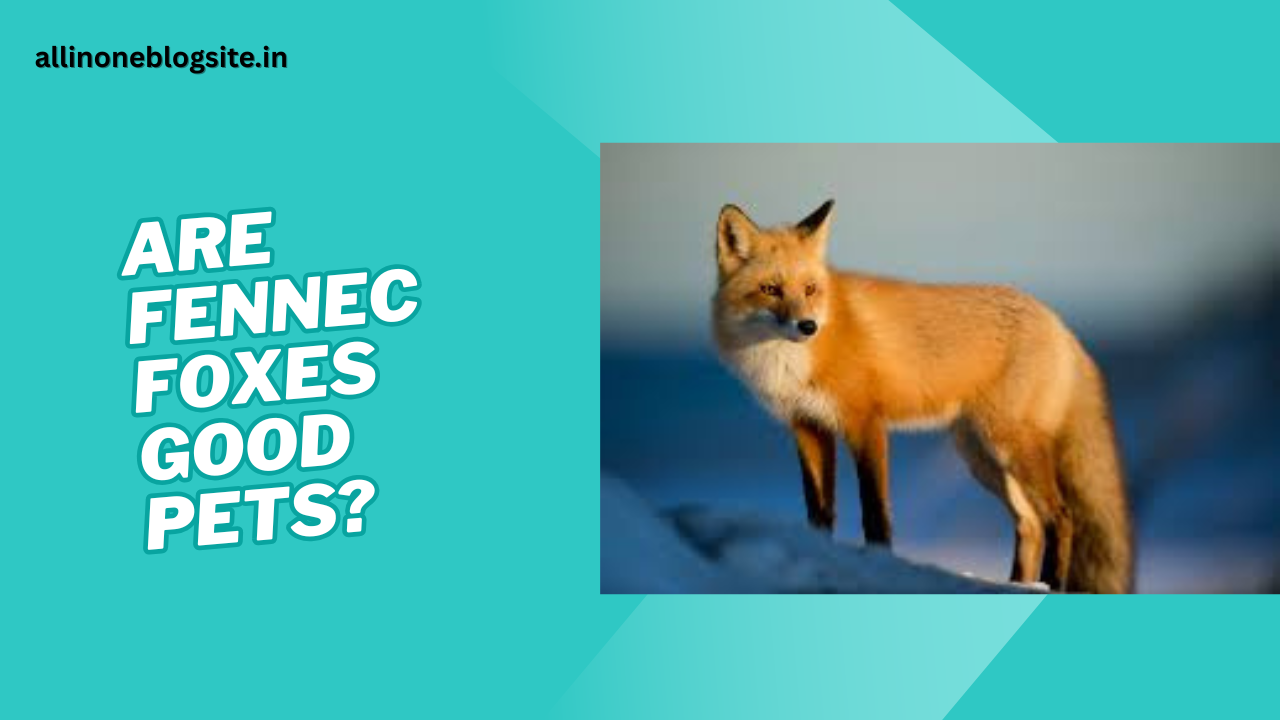
Among the most charming and captivating creatures globally, fennec foxes are really hard to resist. Their big ears, tiny bodies, and playful nature attract and enchant many people. Is it a good idea, though, to keep fennec foxes as pets? This question requires a lot of reflection before making a decision about pet ownership. We cover a wide range of information about fennec foxes throughout the guide: their natural behavior, diet, and living needs as well as legal and ethical issues. Eventually, you will be able to determine if a fennec fox can be a perfect fit for a human household or not.
1. Understanding Fennec Foxes
Before coming to a conclusion about their pet potential, knowing how fennec foxes behave in the wild is vital.
1.1 Where Fennec Foxes Come From
• Fennec foxes’ natural habitats are the Sahara Desert and adjoining parts of North Africa.
• These animals have adapted to thrive in dry and hot climates where the temperature can be extreme.
• Big ears not only help them to keep their cool but also amplify the sound of the prey that is underground.
1.2 Physical Traits
• Among the smallest fox species, they generally weigh about 2-3 pounds only.
• Ears that can measure up to 6 inches in length possess the capability to regulate the body temperature.
• Their coats are thick and insulating so that they can withstand even the coldest nights in the desert.
• Longevity and communication are two of the main functions of their long tails.
1.3 Behavior in the Wild
• They are primarily nocturnal — actively hunting and exploring at night while sleep during daytime.
• Reside in packs known as “clans.”
• Skilled diggers; can burrow to great depths and make very complex tunnels.
• All their sounds made during communication consist of chirps and squeaks, which are indeed very different from the common dog barking.
Knowing these characteristics helps us to realize that the act of keeping one as a pet might not be so easy after all.
2. Legal Status of Owning a Fennec Fox
If you want to own a fennec fox as a pet, the first thing you need to find out is its legal status in your area. Depends on your location, laws may vary considerably between countries, states, or even municipalities.
2.1 Legal Position around the Globe
• Wild animals as pets is a law that is prevalent in most countries.
• India, fennec fox, and any native wild animal are not legal to be owned. Such animals are under the protection of wildlife laws.
• In the United States, some states allow ownership with a permit, while others ban it completely.
• The UK and most European countries have very strict animal welfare laws that make private ownership almost impossible.
2.2 Reasons for the Laws
The reasons for such laws are numerous, some of which are:
• To stop the animal from being exposed to sub-standard living conditions.
• To combat the illegal wildlife trade.
• To make sure that the owners are fully aware of the care requirements of exotic species.
• To ensure the safety of the public as wild animals can sometimes be unpredictable.
It is always advisable to consult your local wildlife department before deciding on an exotic pet.
3. Are Fennec Foxes Domesticated?
One of the main misconceptions is that small animals can easily get used to home life. Unfortunately, fennec foxes are not among the domesticated species of animals.
3.1 Difference Between Domesticated and Tamed
• Domesticated animals are those that have gone through thousands of years of breeding for humans to live with them.
• Tamed animals can be around people but still exhibit wild traits. Fennec foxes belong to the latter group. Even when they are born in a zoo or in an animal breeding center, they still show their wild side.
3.2 Natural Instincts That Remain
• They will dig everywhere and all the time.
• They will always use urine to claim their spot.
• They will bite or scratch if they feel threatened.
• Their loud screams can upset the neighbors.
Such characteristics make it difficult for fennec foxes to be raised in ordinary households.
4. What Fennec Foxes Need to Live Well
However, if a person still opts for having one as a pet in a legal manner, it is of utmost importance to supply the necessary conditions and to cater to their requirements in full measure.
4.1 Habitat and Space
• A standard living space is not the right place for a fennec fox.
• Outdoor enclosures with strong fencing are necessary for them as they can easily escape by either jumping or digging.
• The area’s physical characteristics should be dry, warm, and safe, resembling their natural habitat.
• They need a shaded place and a shelter for their afternoon sleep.
4.2 Temperature Requirements
• Their original habitat is desert.
• Laconic about heat, they rather have it between 20°C to 35°C.
• Cooling period harms them, thus—either heating or warm bedding might be a winter necessity.
4.3 Diet and Feeding
• In the wild, their menu consists of insects, small rodents, birds, eggs, and plants.
• If they were to be pets, a balanced diet would be consisting of:
- High-quality cat or dog food (protein-based)
- Insects like crickets or mealworms
- Fruits such as apples or bananas (in moderation)
- Cooked eggs occasionally
• Do not give chocolate, onions, garlic, and processed foods – these are toxic to them.
4.4 Water
• They require to have constant access to clean water, although they are adapted to dry habitats.
4.5 Enrichment
• Toys, digging boxes, tunnels, and climbing structures should be provided.
• Mental stimulation is a measure against boredom and destructiveness in terms of behavior.
5. Behavior and Socialization
5.1 Personality
• Curious, watchful, and clever.
• May be responsive to the interaction of trusted humans.
• Are frightened easily by sounds and movements that are loud and sudden.
• Not willing to be handled at all times.
5.2 Social Needs
• Being in the wild, they are in packs.
• Loneliness or anxiety are consequences of keeping just one fox.
• But multiple foxes mean more difficulties and expenses.
5.3 Training Possibilities
• With absolute patience, they can undergo the process of litter training, but still, accidents will happen often.
• The employing of positive reinforcement is the most effective method and never punishing them is part of the process.
• They can get a grasp of the basic commands such as “come” or “stay,” but patience is the key in training.
5.4 Noise
• Fennec foxes are very vocal animals producing all sorts of noises like barks, squeaks, and yelps.
• Their noises can be quite loud, particularly during the night hours.
5.5 Bonding
• Vocalization or smell might be the ways of recognition of the caretaker by the fox.
• On the other hand, the bond foxes create is different from that of the dog or cat.
• They want to be left alone and might only come around when they think you are safe.
6. Health and Veterinary Care
6.1 Common Health Issues
• Parasites (both internal and external)
• Obesity due to an incorrect diet
• Dental diseases
• Upper respiratory tract infections especially when there is exposure to cold
• Mental breakdown due to stress
6.2 Finding a Vet
• Veterinarians that can treat exotic animals are not plenty.
• The owner must take care to locate one who is proficient in treating the wildlife or zoo animals.
6.3 Vaccinations and Preventive Care
• Rabies, distemper, and parvovirus vaccines are sometimes recommended.
• Through regular checkups, the fox’s health is maintained.
6.4 Grooming
• Fennec foxes are very neat creatures and do their grooming like cats.
• They have a seasonal shedding of fur.
• Brushing them on a regular basis will make it easier to manage the hair that falls off.
7. Ethical Concerns
The keeping of fennec foxes as pets is associated with a number of ethical dilemmas.
7.1 Impact on Wildlife
• Illegal wildlife trade is responsible for most of the pet foxes.
• Taking them away from their mother nature means that you are indirectly killing the wild animals.
7.2 Welfare Issues
• Fennecs are large animals not suitable for small cages or indoor living.
• Captivity is the cause of stress and health problems for many of them.
7.3 Longevity and Responsibility
• Their lifespan ranges from 10 to 14 years.
• Most of the people are not aware of this lifetime commitment.
• After growing up, their bad behavior can be the result of lack of attention and scaring.
7.4 Ethical Alternatives
• Take in wildlife sanctuaries’ donations instead of owning exotic animals.
• Be active in giving fun to organizations that are caring for desert wildlife.
8. Comparison: Fennec Fox vs Common Pets
| Feature | Fennec Fox | Dog | Cat |
|---|---|---|---|
| Temperament | Independent, wild | Social, loyal | Independent but adaptable |
| Legality | Often restricted | Legal everywhere | Legal everywhere |
| Noise Level | High | Moderate | Low |
| Training | Difficult | Easy | Moderate |
| Space Needs | Large outdoor enclosure | Yard or home | Indoor |
| Cost of Care | High | Medium | Medium |
| Veterinary Care | Limited specialists | Widely available | Widely available |
From this comparison, it’s clear that fennec foxes require far more effort, money, and patience.
9. Costs of Owning a Fennec Fox
9.1 Initial Purchase
• Legal breeders will usually ask for a high price that can reach thousands of dollars.
• Do not forget to check if the breeder is licensed and marked as ethical at all times.
9.2 Habitat Setup
• An outdoor enclosure that is secured and has all necessary amenities like shelter, heating, and toys will add several hundreds more to the cost.
9.3 Food and Care
• The monthly bills for food, veterinary visits, and care are considerable.
9.4 Unexpected Costs
• Medical emergencies
• Escape prevention or digging behavior damaging property requiring repair
10. What Experts Say
Most of the time, keeping fennec foxes as pets is frowned upon by wildlife specialists and animal behaviorists. Their main points are as follows:
• The wild nature of the animal cannot be completely waved off by breeding.
• Dogs and cats cannot be accustomed to desert conditions.
• The chances of injury are very high (for people and animals).
• Few pet fennec foxes are not thrown away or rehomed. It’s a common case for animal shelters to take in fennecs that were kept as pets and later surrendered due to behavioral issues.
11. Signs a Fennec Fox is Stressed or Unhappy
If you ever take care of one, it is very important to be able to tell when it is stressed. The signs are:
• Hiding or not eating at all
• Pacing or digging constantly
• Bitten or growled at every time
• Over-groomed or lost a lot of fur
• Called out loudly for help
Animal stress is generally an indicator for needing more room or better conditions.
12. Is It Ethical to Breed Fennec Foxes?
There are heated debates about the ethics and ecology of breeding fennec foxes in captivity.
• Many are bred just for making money, not for conservation.
• Captive-bred foxes will have a hard time adapting to the wild if they are ever released.
• Only zoos, not private owners, are allowed to run breeding programs.
13. Legal Penalties for Illegal Ownership
Depending on the laws of your country, illegal ownership may lead to consequences such as:
• Such a high fine that it practically means losing the animal as a pet.
• The animal will be taken away from you.
• Considered an offense against wildlife protection laws, thereby prosecution.
Animal welfare is the main concern for authorities, thus even accidental breaches can still have a devastating impact.
14. Alternatives to Keeping Fennec Foxes
If you fennec foxes are your favorite but still want a choice that is responsible:
• Go to a wildlife park or a sanctuary.
• Bring home a domestic pet e.g., a dog or a cat.
• Back up the efforts to save the environment.
• Follow the video streams or watch the documentaries on desert animals.
These alternatives let you enjoy their cuteness without doing any harm.
15. Summary: Are Fennec Foxes Good Pets?
The succinct response: Nope, fennec foxes are not suitable pets for the majority of people. They are adorable and intriguing but still wild animals that need extra care and a large area. Their nighttime nature, digging habits, and craving for freedom make them unsuitable for homes.
Main points:
• They are not tamed.
• Legal limitations are very strict in most regions.
• Their care takes a lot of unfathomably expensive resources.
• They may have long lives but are often stressed out in captivity.
If you are concerned about the animals then, get a glimpse of the fennec foxes in their natural desert habitat, or at the conservation centers—they are not to be seen in cages or apartments.
16. Final Thoughts
Taking care of a wild animal might look like an adventure, but it is a huge responsibility. Fennec foxes should be in jungles or deserts, where they can dig, hunt, and socialize naturally. True love for these beings means protecting their natural habitat, not possessing them.
If you’re looking for a companion, adopt an animal that thrives in human care — one that enjoys affection, safety, and the comfort of a home.
Fennec foxes deserve respect, freedom, and protection — not captivity.
Also Read: How Long Can a Squirrel Live Trapped in a Wall?.