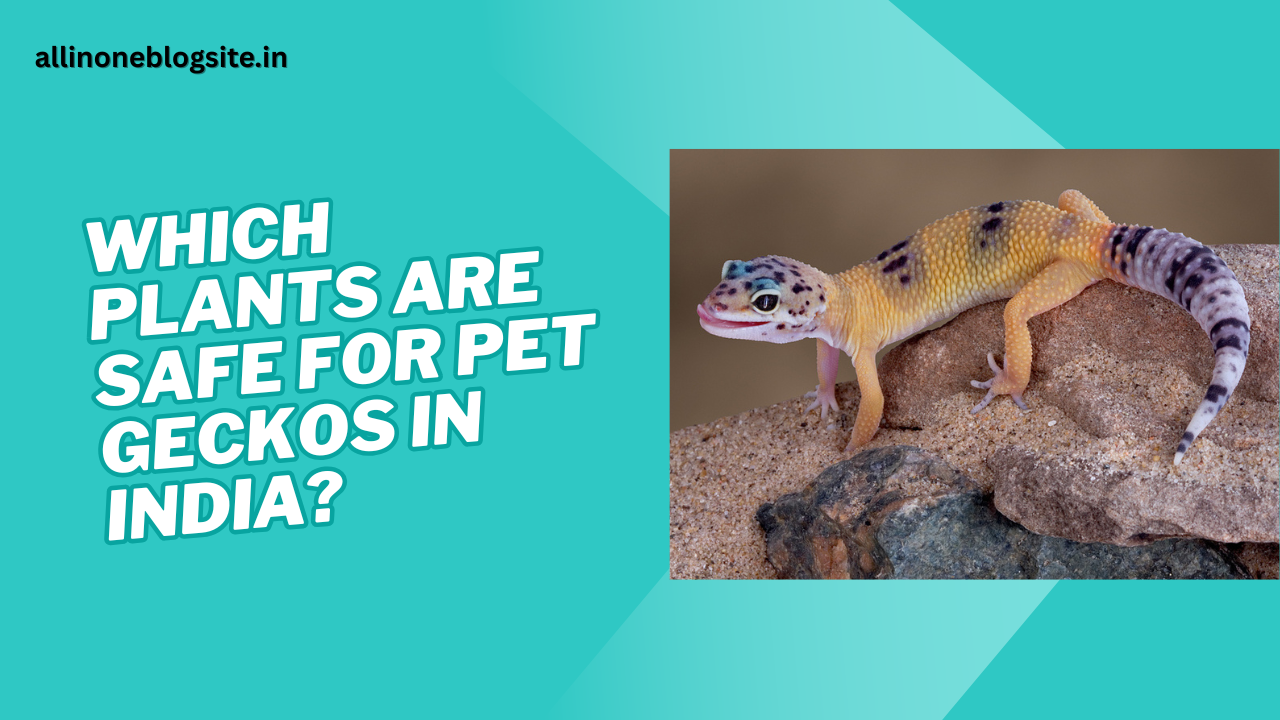
Keeping pet geckos in India can be very rewarding but it needs the grueling work of creating an environment that is safe and comfortable for its inhabitants. The other way to perk up their habitat is with live plants. Plants also create a very natural look in the enclosure and provide shelter for your creature, allowing humidity control and mental stimulation. This will give you an idea about everything regarding choosing the safe plants for pet geckos in India, their categorization, and maintenance inside a gecko-friendly enclosure.
1. Geckos’ Habits in India
Before choosing plants, it is good to know your animal’s real-course behavior.
Key Facts About Pet Geckos:
• Most Indian geckos are nocturnal, active at night and resting during the day.
• They are ground-dwellers and, while some climbing may occur, are weak climbers in general.
• Depending on the species, its native habitat in India consists of dry-grasslands, rocky areas, and forest edges.
Implications for Plant Selection:
• Must be all safe and nontoxic in case your pet nibbles at them.
• Avoid plants with thorns or sharp-edged leaves that could injure your gecko.
• Select plants suited to either dry or humid microhabitats, depending on your gecko species.
2. Why Plants Are Important in Gecko Enclosures
Plants in a gecko enclosure give these benefits to the gecko:
• Hiding places: Geckos feel safe hiding among the foliage.
• Humidity control: They maintain moisture levels suited to a bioactive enclosure.
• Environmental enrichment: They help generate opportunities for natural behaviors, such as exploring and food searching.
• Aesthetic appeal: A nicely planted tank helps mimic the gecko’s natural environment and looks beautiful.
3. Choosing Gecko-Safe Plants
Safety is always the first consideration when selecting plants. Not all plants are good for a gecko, even though they may be common in homes.
3.1 Toxicity
• Plants with toxic sap or leaves should be avoided.
• Euphorbia genus (e.g., Pencil cacti, Firesticks) is toxic.
• Air plants (Tillandsia) are tropical and require high humidity, incompatible with desert-dwelling geckos.
3.2 Physical Safety
• Avoid spiky or thorny plants, such as cacti.
• Prefer plants with smooth leaves that will not become injurious.
3.3 Adaptability
• Choose plants withstanding the temperature and humidity range of your gecko enclosure.
• Succulents and drought-tolerant plants may be apt for dry conditions.
• Tropical plants work better for humid species or bioactive setups.
4. Other Category Plants Safe for Geckos
Plants segregated into layers according to height and growth pattern are:
- Groundcover Plants – Cover substrate, low-growing, provide hiding places.
- Understory Plants – Medium-height plants, provide depth and cover.
- Canopy Plants – High plants that offer vertical interest and some climbing opportunities.
4.1 Groundcover Plants
They are short ground covers extending over the floor of the enclosures. They provide shelter, thus making geckos feel a little more safe.
Examples:
• String of Pearls (Senecio rowleyanus) — Creeping succulent, drought-tolerant.
• String of Hearts (Ceropegia woodii) — Hardy ground vine.
• Sempervivum (House leeks/Hens and Chicks) — Forms thick mats; easy to control.
• Haworthia spp. — Small, low-growing succulents; hardy.
Care Tips:
• In between waterings, allow the soil to dry up completely.
• Avoid high humidity plants in dry enclosures.
• Check for any broken leaves, as they may be ingested by geckos.
4.2 Understory Plants
Understory would refer to plants fitting the intermediary stature between the ground cover and canopy; they vary greatly in shape and therefore have mid-level cover and interest.
Examples:
• Jade Plants (Crassula ovata, Gollum Fingers) – Succulent, slow growers, kept gecko-safe.
• Haworthia Cooperi or Cymbiformis – Small-sized, very little care needed, provides texture.
• Aloe species (except those with prominent spines) – Some small aloes shrubs good for understory care.
Care Tips:
• Watch growth and trim when necessary.
• Place taller plants out of the way from heat and light sources.
• Make sure they don’t obstruct hides and water bowls.
4.3 Canopy Plants
Canopy plants are taller species that give vertical structure to an enclosure. Although rarely climbing geckos may be superficial, they go with the frolicsome look and provide shadowing.
Examples:
• Ponytail Palm (Beaucarnea recurvata) – Stores water in caudex-upper adapted to dryness.
• Snake Plant (Sansevieria spp.) – Tolerates low light, slow growth with sturdy leaves.
• Elephant Bush (Portulacaria afra) – Medium growth, imparting shrub-like appearance.
Care Tips:
• Avoid creating pockets of high humidity by canopy plants.
• Ensure pots or anchors on the substrate to prevent tipping.
• Prune occasionally to maintain heights and avoid overcrowding.
5. Plant Care in Gecko Enclosure
Even safe plants need proper care to thrive alongside geckos.
5.1 Watering
• Succulents: Water moderately but do not allow the soil surface to be moist. Let it dry in between watering.
• Tropical plants: Light misting; keep an eye on the humidity.
5.2 Lighting
• Indirect sunlight or full-spectrum LEDs are most suitable.
• The light set-up needs to accommodate the plant species and gecko species equally.
• Excess heat can dry out leaves and stress the gecko so keep away from plants.
5.3 Soil and Substrate
• Succulents and arid species require well-draining soil.
• Bioactive substrate is a soil combination cultivated with leaf litter and cleanup crew insects.
• Beware of fertilizers and pesticides in the substrates that might be harmful to the geckos.
5.4 Maintenance
• Remove the decayed leaves.
• Prune heavily outgrown plants.
• Rotate plants from time to time for even growth.
6. Bioactive Terrariums
Bioactive systems function by bioactively recreating the natural shelter through plants, substrate, and cleanup crew organisms including springtails and isopods.
Benefits:
• Less stringent cleaning.
• Keep the substrate alive and set between wet and dry.
• Natural hiding spots for geckos.
Setup Steps:
- Add substrate layer appropriate for plants.
- Plant ground cover, understory, and canopy species.
- Introduce cleanup crew and allow for a few weeks’ working time for plants.
- Add your gecko once the plants are stable.
Tip: Let enclosure settle for 4-6 weeks before the geckos happen to be introduced for a smoother transition.
7. Plants to Avoid
Some plants may become toxic or unsafe for geckos:
• Euphorbia species – With toxic latex.
• Cacti – Spines can hurt geckos.
• Tillandsia (Air plants) – Require high humidity, which is not suitable for desert geckos.
• Dieffenbachia, Oleander, and Croton – Poisonous when ingested.
8. Indian Context: Climate Considerations
Setting up geckos in India considerations:
• Scorching heat of summer – Opt for sturdy, drought-tolerant succulents.
• Monsoon season – Do not use tropical plants for an arid setup, as the plants’ excess moisture can harm geckos.
• Indoor light – Supplement the light with artificial grow lights if there is insufficient sunlight.
9. Some Tips for Helping Maintain a Healthy Gecko-Plant Habitat
• The plants chosen should have one or two from each category for balance.
• A humid hide must be provided for shedding.
• Feeding and watering should always be available with nothing obstructing them.
• Use sturdy plants so the geckos won’t be hurt when they climb on them or rest under them.
• Check the condition and the health of the plants and geckos regularly.
10. Advantages of a Planted Gecko Enclosure
• Nature-provided hiding spots to geckos.
• Providing picturesque visual appeal to the naturalistic setup.
• Empowering a bioactive cleanup system.
• Vitalizer of gecko well-being through environmental enrichment.
11. Summary of Common Questions
Can geckos eat these plants?
Some might nibble at certain plants; however, all of those are non-toxic.
Soil necessary for all plants?
Succulents have to be in well-drained soil; epiphytes may not.
Would plants survive in a completely arid enclosure?
Only the drought-tolerant.
60 days or so before putting in geckos?
It really is up to four-six weeks to let the plants establish themselves.
Should bioactive enclosures be used?
They should not be strictly required, but yes, they reduce cleaning and make a happy gecko.
Conclusion
Selecting safe plants for pet geckos in India is more of an imperative for a healthy and visually appealing enclosure. With a proper application of knowledge about gecko behavior and plant categories and further nuances of plant care, one would be able to offer them an environment that is thriving and rather naturalistic. Succulents and hardy tropical plants, along with bioactive-friendly ones, result in safer and more interactive enclosures that offer enjoyment to both the geckos and the owner. Always opt for non-toxic plants well suited to the environment and allow adequate time for plants to adjust before bringing in your gecko. A good planted terrarium will see your gecko living a relaxed and enriched life while also decreasing the maintenance chores and cosmetically enhancing your terrarium.
Frequently Asked Questions
1. Can geckos live with tropical plants in a dry enclosure?
Yes, as long as humidity is controlled. Most tropical plants desire moisture; thus, pick hardy ones regarding low humidity or perhaps mist rarely.
2. Are edible plants safe for geckos?
Some edible plants like small herbs will be non-toxic and safe to nibble, but always verify the species’ safety prior to introducing it in the enclosure.
3. How can I stop geckos from uprooting plants?
Go for heavier pots, make sure plants are secured well in their substrate, or use glue-safe anchors as needed for stability. Certain groundcover plants with shallow root systems might require some additional support.
4. Do plants help with gecko shedding?
Yes: Plants enhance the humidity in certain spots so that geckos can shed, which is better for their skin. A humid hide beside plants would certainly be wonderful.
5. Any chance for plants to endure the Indian summer in a gecko tank?
Drought-resistant succulents and hardier varieties will probably make it through, but tropical plants would definitely need intervention with temperature control or grow lights so as not to become heat-stressed.
6. Are air plants good for bioactive gecko setups?
Generally, no. Air plants demand the sustained high humidity of tropical forests, which makes those conditions stressful for desert-adapted geckos and unsuitable for air plants.
7. Can tall plants be climbed by geckos safely?
Yes, with the type of plants having sturdy leaves and stiff-bodied stems. Avoid grazing along the line with fragile and spiny plants that could harm the gecko while climbing.
8. How often should one be trimming plants in a gecko enclosure?
Plants should be trimmed as required to stay in size and prevent the plants from going wild. Generally, the fast growers require trimming every 2 to 4 weeks; those slow growers like some succulents might go longer.
9. Is moss okay to use in Indian gecko enclosures?
Sphagnum moss, in a tropical-reptile bioactive setup, is okay, but for an arid one, it would not be suitable because it raises moisture levels too much.
10. Do planted enclosures lessen cleaning frequency?
Yes, live plants along with cleanup crews breaking down waste means less maintenance and increased health for the tank.
Also Read: Things I Wish I Knew Before Getting a Hamster.