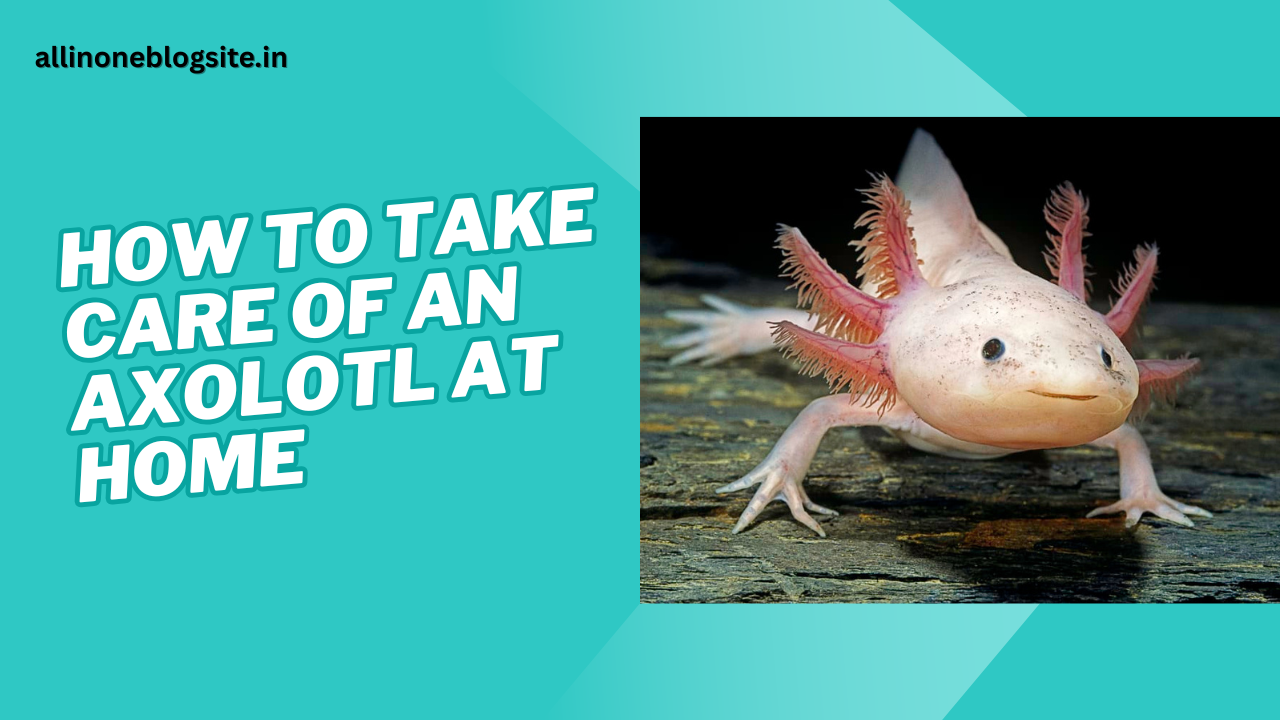
Axolotls are very oddly fascinating aquatic creatures, so much so that they are slowly turning into popular pets. Their peculiar appearances and interesting biology certainly make them a focal point in any home aquarium. In terms of care, axolotls are not very difficult to keep, but they have their own very peculiar requirements to keep happy and well. From setting up the habitat to maintaining the axolotl health and diet, this guide covers everything you need to know about caring for an axolotl at home.
1. Introduction to Axolotls
Axolotls (Ambystoma mexicanum) are aquatic salamanders from lakes in Mexico. Usually, amphibians go through metamorphosis. Instead, they keep larval features like having external gills all through life. This rare phenomenon called ‘neoteny’ makes axolotls special as pets. They are also known for regenerating hulls-and-lost-body-parts-like-limbs,-eyes, and-major-parts-of-the-spinal-cord. This remarkable regenerative ability adds to their allure as pets, but also requires specific care to ensure they stay healthy.
2. Setup of the Ideal Habitat
Tank Size and Setup
The minimum recommended sized tank for axolotls is 20 gallons for one adult axolotl. Incidentally, bigger tanks are better since the axolotls require more swimming space and open area to grow. Long and wide tanks are most preferred since axolotls are bottom dwellers and do not swim much near the surface.
- Recommended Size: 20 gallons for one axolotl; add 10 gallons for each additional axolotl.
- Tank Shape: Long and wide tanks are preferable.
Water Conditions
Axolotls require cool and clean water. They love temperatures ranging between 60 and 68 °F (15 and 20 °C). Temperatures higher than 74 °F (23 °C) would stress the axolotls and may be detrimental. Keep these in mind so your water temperature remains ideal: never put the tank in direct sunlight or near any heat source.
- Temperature: 60°F to 68°F (15°C to 20°C)
- pH: 6.5-7.5
- Water Hardness: Soft to moderately hard
Substrate and Decorations
The substrate for the axolotl must be smooth and non-toxic. Fine sand serves best as it is easy to clean and is safe if swallowed. Do not use gravel or any sharp decoration, since the axolotl could be injured by it or may swallow it, causing digestive issues.
- Substrate: Fine sand or a bare-bottom tank.
- Decorations: Avoid anything sharp; instead, add smooth rocks, aquatic plants, or caves for hiding.
Filtration and Water Changes
Clean water is necessary for axolotls, and hence the filtration system is a must-have. A gentle interference filter or sponge filter would be ideal, as axolotls do not like water currents that are strong. Regular water changes are a must to keep water standards up.
- Water Change Frequency: 20%-30% weekly or even more if no filtration is used.
- Filtration: Use a sponge filter or a gentle external filter.
3. Feeding Your Axolotl
What Do Axolotls Eat?
Axolotls are carnivorous and need a protein-rich diet. They feed on small fish and worms and crustaceans. In captivity, they have to be fed appropriate foods like earthworms, bloodworms, and small fish. You may also supply them with commercially prepared axolotl pellets.
- Staple Foods: Earthworms, bloodworms, blackworms, and pellets.
- Sometimes Treat: Small pieces of chicken and shrimp.
Feeding Schedule
Young axolotls are fed more frequently usually once a day. As they mature, however, they are fed 2 to 3 days a week. Do not overfeed since unconsumed food deteriorates the water quality and causes the schnook to put on weight.
- Young Axolotls: Feed them daily.
- Adult Axolotls: Feed 2-3 times a week.
Dietary Options
Axolotls are actually quite easy to feed:
- Live Food: Earthworms, blackworms, shrimps.
- Frozen Food: Bloodworms, daphnia, brine shrimp.
- Commercial Pellets: Quality axolotl pellets.
4. Handling and Interaction
Is It Possible to Handle an Axolotl?
The handling of axolotls must be kept to an absolute minimum, due to their sensitive skin. Their skin is permeable and they can absorb substances such as oils, soaps, or chemicals from your hands.
- Handling: Refrain from handling your axolotl unless it is an emergency.
- When to Handle: Move your axolotl only when using a net for tank maintenance.
Interaction Best Practices
Observing axolotls from a distance seems best, but it is possible to interact with them from afar. Some axolotls will swim up to the glass of the tank when they see you, as if to witness your presence.
- Interaction: Viewing from outside the tank.
- Stress Management: Keep noise down; avoid sudden movements near the tank.
5. Health and Wellbeing
Common Health Issues
While axolotls are generally hardy, they can suffer health issues, most often when water conditions have deteriorated. Some ailments that are generally common include:
- Infections: Such as fungal and bacterial infections usually coming about due to really poor water quality.
- Gastrointestinal Obstructions: Often brought about by ingestion of gravel or small stones.
- Skin Problems: Dry or damaged skin caused by improper handling of an axolotl.
Signs of the Healthy Axolotl
A healthy axolotl should be roaming around its tank with smooth and moist skin, its gills clear. It normally has a good appetite and is alert whenever you go towards the tank.
- Signs of Health: Pinkish smooth skin; clear gills; actively moving around.
- Signs of Illness: Lethargy, refusals to eat, skin damage
6. Breeding Axolotls
How to Breed Axolotls
Axolotls are able to reproduce once they reach sexual maturity, generally between 12 and 18 months. The male deposits a spermatophore that lies on the substrate. The female then picks it up to fertilize her eggs. These females can lay hundreds of eggs simultaneously.
- Breeding Attitude: Keep the water cooler, at approximately 60° to 65°F, anything warmer might not induce breeding.
- Eggs: They hatch after 2 to 3 weeks, and axolotl larvae are very tiny.
Axolotl Egg Care
After the eggs hatch, larvae will need to be provided with tiny live food to eat, such as daphnia or brine shrimp; as they grow, larger foods should be given, such as bloodworms.
- Hatching: Eggs hatch in 2-3 weeks.
- Feeding Larvae: Small live foods to start, then larger ones gradually.
7. Challenges of Owning an Axolotl
Although easy to care for, challenges may arise in the life of an axolotl owner:
- Temperature: Maintenance of the correct water temperature is vital, especially during the hot months.
- Tankmates: Never keep axolotls with other animals; they will eat smaller fish or other axolotls.
- Water Quality: Poor water quality can lead to health issues and stress.
Common Problems and Their Solutions
- Water Temperature: Use a chiller on a hot day.
- Tankmates: Only keep axolotls of a similar size together.
- Water Quality: Water changes are mandated. Also, if that filter isn’t good enough, replace it.
8. Conclusion
Setting up an environment for axolotls, feeding them well, and always ensuring their water is in good condition-watering, dusting, cleaning, and anything else-hoping for them to be happy is a rewarding way to care for an axolotl. Given the care needed, these creatures can live beyond 15 years. They are not like dogs or cats with which you interact before them, but the complexity of their biology and behavior will surely interest you. With care, your axolotl will be happy and bring joy to your life for many years to come.
Frequently Asked Questions
Can Axolotls live with other species of fish?
Axolotls should not be housed with the majority of fish species. They do see smaller fish as prey and try to eat them. Fish with spiny fins can hurt the axolotl. A species-only tank would thus be best for axolotls to maintain their safety and well-being.
How Do I Know If My Axolotl Is Stressed?
Typical signs of stress in an axolotl are erratic swimming, lack of food intake, or an excessive amount of hiding. Usually, stressful conditions will mean an abnormal motion of the gills or a refusal to interact with food. Among stressors are bad water conditions, temperature fluctuations, and very rough handling of the axolotl.
Do Axolotls Need Filters?
An axolotl can live in a tank without a filter, but it is highly discouraged since without any filtering procedure water quality can change rapidly and invite health problems. Going without a filter puts one in the position of changing water often (20-30% following the week). This will ensure cleanliness of water.
What Should Be Done If My Axolotl Does Not Eat?
An axolotl not eating indicates checking for water temperature. Anything above 74°F (23°C) can cause a lack of appetite. If things are good, consider what time you are trying to feed your axolotl; there is a good chance that feeding in the evening is more successful as that is when they are more active.
Do Axolotls Need UVB Lighting?
No, axolotls do not require UVB lighting. They are water-dwelling creatures and have no need for sunlight as lizards do. Bright illumination stresses them out, so it is best to put on dim light or let ambient light shine in their aquarium.
How Long Does It Take for Axolotls to Regrow a Limb?
Regrowth may come anywhere between 30 to 60 days, depending on an injury’s severity and the axolotl’s well-being. Conversely, the regrowth of certain body parts like spinal cords or heart tissues may indeed take longer.
Are Axolotls Nocturnal?
Axolotls are mostly nocturnal animals. They remain active in the night or when it is dark. So, if your axolotl remains inactive all day, just know that is normal and try feeding it at night when it might be awake.
Can Axolotls Live in Soft Water?
Axolotls can live in soft water, but it should not be very soft. Water that is too soft, with very little mineral content, leads to axolotls having very fragile bones and being in generally unhealthy conditions. Hardness levels from 7-15 dGH must be maintained in order to simulate their natural surroundings.
Is It Safe for Axolotls to Swim in Currents?
Axolotls do not withstand quite well against currents. A strong water flow would stress them out and could injure them. Best to use a gentle filter or sponge filter that does not create strong currents capable of disrupting their peaceful environment.
Can Axolotls Live Without a Lid on Their Tank?
A sturdy lid secured on the tank is very important. You really cannot underestimate the amount of agility an axolotl can display when it jumps out of its tank, especially if startled. The lid prevents the escape and ensures that your axolotl remains safe in its habitat.
Also Read: Can You Train a Pet Rat to Follow Commands?