Introduction
In India, squirrels can be seen literally everywhere – they run along power lines, climb trees, or hide in parks. The combination of their small size, coat of fur, and playful character makes them great fun to observe. A lot of people, especially those who love animals, ask if they can have a pet squirrel. It gives an impression of being nonchalant to take care of one, but the law does not share the same view. The discussion in this article will cover the legal, moral, and actual aspects of keeping squirrels as pets in India. We will analyze the legal position, the reasons for its existence, and how to handle a situation where a squirrel is wounded or abandoned.
Understanding the Legal Status of Pet Squirrels in India
1. The Law that Governs Wildlife
India is a country where wildlife protection is given utmost importance. The principal law in this regard is the Wildlife Protection Act, 1972. The Act provides for the protection of native mammals, birds, and reptiles from being hunted, captured, or traded. The law states that:
- The government of India owns all native wild animals.
- No wild species can be caught, kept, or traded without proper authorization.
- The punishment can involve both a heavy fine and imprisonment.
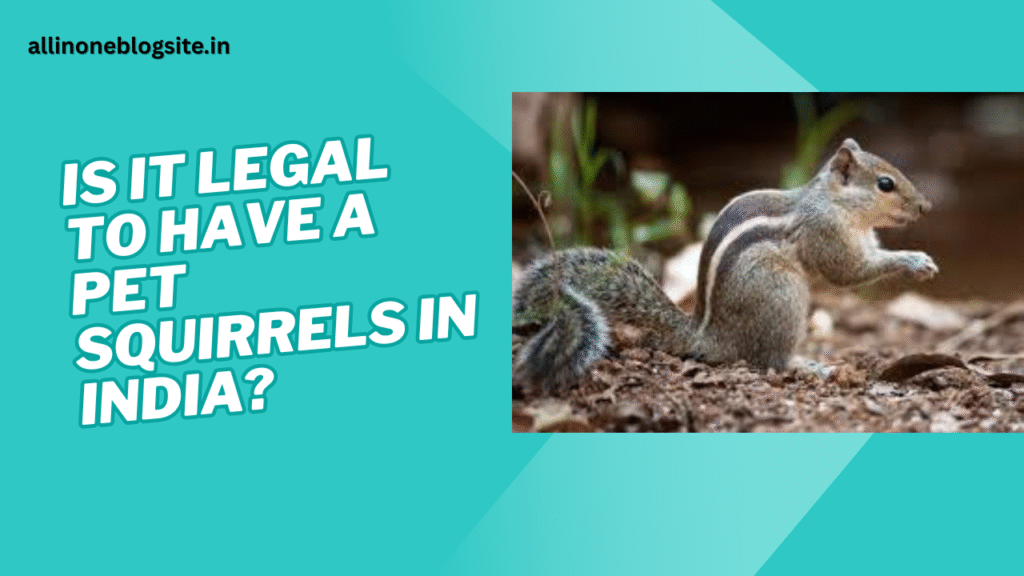
The Indian Palm Squirrel, the Three-striped Palm Squirrel, and the Five-striped Palm Squirrel are among the squirrels of India that are covered by this law. Therefore, it is not permissible to keep them as pets.
2. Wildlife vs Domestic Animals
Domestic animals are the ones that have been living with humans for ages, such as dogs, cats, cows, and goats. Wild animals, in contrast, are those that inhabit forests and other natural areas. Even if an animal is harmless or born near human dwellings, it is still considered a wild one in the eyes of Indian law. Squirrels, although they live in human proximity, belong to the wildlife category. Thus, even if you have the best of intentions, caging or housing one is against the law.
The Pet Squirrel Ban in India Explains Its Rationale
The government has a different point of view when it comes to pet ownership. The same viewpoint is taken in the case of the squirrels and other wild animals, so the government still has to deal with it. The reasons behind the pet ban are scientific, ethical, and conservationist.
1. To Preserve the Ecological Diversity
India is a country with diverse ecosystems, containing vast areas of forest, the desert, wetlands, and high mountains with abundant wildlife. The presence of wild native species in pet households would entail:
- Disruption of the existing ecological balance
- Provision of a market for illegal trading
- A boost in poaching and misuse and exploitation of animals
Squirrels are not merely amusing little creatures; they contribute to the ecosystem. They pollinate plants, spread seeds, and get eaten by larger animals. Their dropping is cleared and the natural balance is disrupted. Keep the truth of the matter, the good side of wildlife trade will never exist without the illegal pet trade. It is one of the largest threats against wildlife in India. The cute and exotic animals mostly get the demand through online. Unfortunately, the demand elicits traders to snatch the young animals from the wild. The law which prohibits private ownership of wild species helps to dismantle the exploitation chain. Such pets, squirrels, even with love could be a link in the chain of the demand for illegitimate wildlife trade.
3. Animal Welfare
Squirrels come across as very adaptable animals but they do go through a lot of suffering if kept in cages. They have very complicated living conditions:
- They need trees in order to be able to climb.
- They require a large area for running and exploring.
- Their diet consists of bugs, fruits, and nuts.
When they are in captivity, they are very susceptible to stress. Stress can lead to:
- The biting of others
- Self-mutilation
- Shortened lifetime
Thus, you would be the one to create the suffering even if it is unintentional.
Common Misunderstandings Concerning Pet Squirrels in India
The misunderstanding of the rules leads many people to break the law without even realizing it! It is time to debunk some myths now.
Myth 1: “It’s okay if I raise a baby squirrel that I found.”
Fact: You can help an injured or orphaned animal, but you cannot keep it permanently. The correct action is:
- Contact a wildlife rescue center or Forest Department.
- Hand over the animal for rehabilitation.
- They will release it safely back into the wild when ready.
Myth 2: “The squirrel lives in my garden, so it’s mine.”
Fact: Wildlife cannot be owned. Even if a squirrel lives on your property, it still belongs to the wild. Feeding it occasionally is fine, but caging or restricting it is not.
Myth 3: “It’s legal to keep foreign squirrel species.”
Fact: Some non-native species might not fall under the Wildlife Act, but importing or owning them still requires special permissions from authorities like the Directorate General of Foreign Trade (DGFT). Without proper documentation, this is illegal too.
Types of Squirrels Found in India
India is home to several species of squirrels. Knowing them helps understand why they are protected.
- Indian Palm Squirrel (Funambulus palmarum)
- Found across southern and western India
- Known for its three white stripes
- Common in urban areas
- Protected under Schedule IV of the Wildlife Protection Act
- Five-striped Northern Palm Squirrel (Funambulus pennantii)
- Native to northern India
- Smaller and faster than the southern species
- Active during the day
- Also protected by law
- Giant Malabar Squirrel (Ratufa indica)
- Found in Western Ghats forests
- Large, colorful, and tree-dwelling
- State animal of Maharashtra
- Strictly protected due to its declining population
Each of these species has a role in the environment. Removing them from nature can harm local ecosystems.
What to Do If You Find an Injured or Orphaned Squirrel
There is still a way to help the little squirrel if it is hurt or orphaned but it should be within the laws of your state or country.
Step-by-Step Guide
- Observe First
Stay and look for the mommy. Sometimes the squirrel’s mother temporarily vacates the cutesy. - Do Not Try to Raise It Yourself
Hand-rearing wild animals almost never has a happy ending. They could be killed by wrong feeding or by stress. - Contact Authorities
- Local Forest Department
- Wildlife SOS, RESQ Charitable Trust, or local rescue NGOs
- Veterinarians who handle wildlife care and are experienced
- Provide Temporary Comfort
If the animal is feeling cold or has an injury, please put it in a box that is lined with cloth. Keep it quiet until help arrives. By doing this, you let the animal live while you still keep in the legal limits.
Penalties for Keeping a Wild Squirrel as a Pet
The illegal act of Wildlife Protection Law breach is an offense which is heavily punished. Legal Ramifications are:
- Fine which can go up to ₹25,000 or even more
- Maximum imprisonment of 3 years
- The animal along with its related property will be confiscated
Even mere Facebook posts that show wild animals as pets can lead to legal consequences. The authorities have started watching such incidents online.
Alternative Pets That Are Legal in India
Common Legal Pets
- Dogs and Cats
- Rabbits
- Guinea pigs
- Hamsters
- Fish
- Certain types of birds like lovebirds, budgerigars, and finches
Exotic Pets Allowed with Proper Permits
- Some reptiles and birds of foreign origin (with documentation)
- Some types of turtles which are non-native
Before acquiring any exotic species always check their legality first.
Why Wild Animals Should Stay Wild
It would be unkind to keep a squirrel as pet even it was allowed. The best place for wildlife is in nature.
Reasons They Should Stay Wild:
- Motion Freedom: A squirrel daily climbs several kilometers.
- Diet: They feed on fruits, nuts, and insects according to the season.
- Wildlife behavior: Wild squirrels communicate and reproduce in the manner they are born.
- Survival a Captive: Animals lose the instincts which are essential for their survival in the wild when kept captive.
Planting a tree means you help the whole ecosystem.
Role of Wildlife Rescue and Rehabilitation Centers
In India several organizations are there to rescue, treat, and release safely wild animals all over the country.
Among Their Activities:
- Injured birds and squirrels are treated
- Animals that have lost their mothers are taken care of and made fit to survive in the wild
- People are taught the laws regarding wildlife
- Awareness programs in schools are conducted
If you truly care for animals, then volunteering or donating to such organizations can really make a difference.
The Ethical Side of Keeping Wild Pets
Apart from legality, there is a question of morality: Is it just to imprison a wild creature for the delight of humans?
- Animals should not be considered as mere decorations or toys.
- They possess feelings and instincts that demand space to be expressed.
- Real animal lovers protect animals where they belong — in their natural habitat.
Kindness should imply one being free rather than being caged.
What to Do If You Already Have a Pet Squirrel
In case you are already in possession of one, don’t get panic. There are responsible measures that can be taken.
- Contact Authorities Voluntarily
Reach the closest Forest Office. They will appreciate your cooperation and might give you directions on safe surrender. - Don’t Release It on Your Own
A captive squirrel might not be able to survive outside right away. Experts can rehabilitate him/her in a safe manner. - Learn and Educate
Use your experience to scatter the knowledge. Assist people in understanding the reasons for not bringing wild animals into homes.
Global Perspective: Keeping Squirrels as Pets in Other Countries
In the United States or the United Kingdom and some other nations, different states or counties have different rules. Some species can be kept if you get a special permit. But, on the other hand:
- Nobody is allowed to keep native wild animals in many states.
- Caring for wild animals requires obtaining rehabilitation permits.
Even in those places, the experts do not approve of keeping squirrels as pets as they still remain unpredictable and stressed due to captivity. Thus, the very strict Indian stance is in agreement with the global principles of animal protection and wildlife conservation.
How to Connect with Nature Without Owning a Wild Pet
Wild animals do not need to be caged for you to enjoy their company. There are safe, legal, and meaningful alternatives which are:
- Installing feed stations for birds and squirrels in your backyard.
- Planting indigenous trees that can attract animals and birds.
- Offering your services to wildlife rescue organizations.
- Grounding through visiting wildlife sanctuaries where learning and observing animals happen in a natural way.
- Financially supporting animal rights campaigns that safeguard habitats.
These are ways that will enable you to witness the beauty of nature while the animals remain unscathed.
Frequently Asked Questions
1. Is it allowed to have a pet squirrel in India?
No, it is illegal to keep any squirrel species, which are native, as pets under the provisions of Wildlife Protection Act, 1972.
2. Can I keep the baby squirrel I found?
No, you are allowed to help it temporarily but you must give it to a wildlife rescue or to the Forest Department.
3. What if the squirrel was born in my house?
It does not matter if it was born on your land, it is still a wild animal and therefore cannot be kept as a pet.
4. Are foreign squirrels legal in India?
Only if you have the necessary import licenses and permits. However, it is still discouraged for ethical reasons.
5. What should I do if I already have one?
Reach out to the Forest Department for help in safe surrender and rehabilitation.
Conclusion
Owning a squirrel as a pet in India might look like an innocent or even a loving activity but, in fact, it is illegal and harmful to the animal. The Wildlife Protection Act guarantees that these creatures will stay where they belong — in the wild. True kindness is not in having but in saving. If you feel attracted to these playful animals, then support them by protecting their homes, planting more trees, or making donations to rescue organizations. Nature respect starts with knowledge — and by complying with the law you become a protector of the wildlife not a master over it.
Also Read: Why Is My Dog Breathing Loud Through His Nose? A Complete Pet Owner’s Guide.