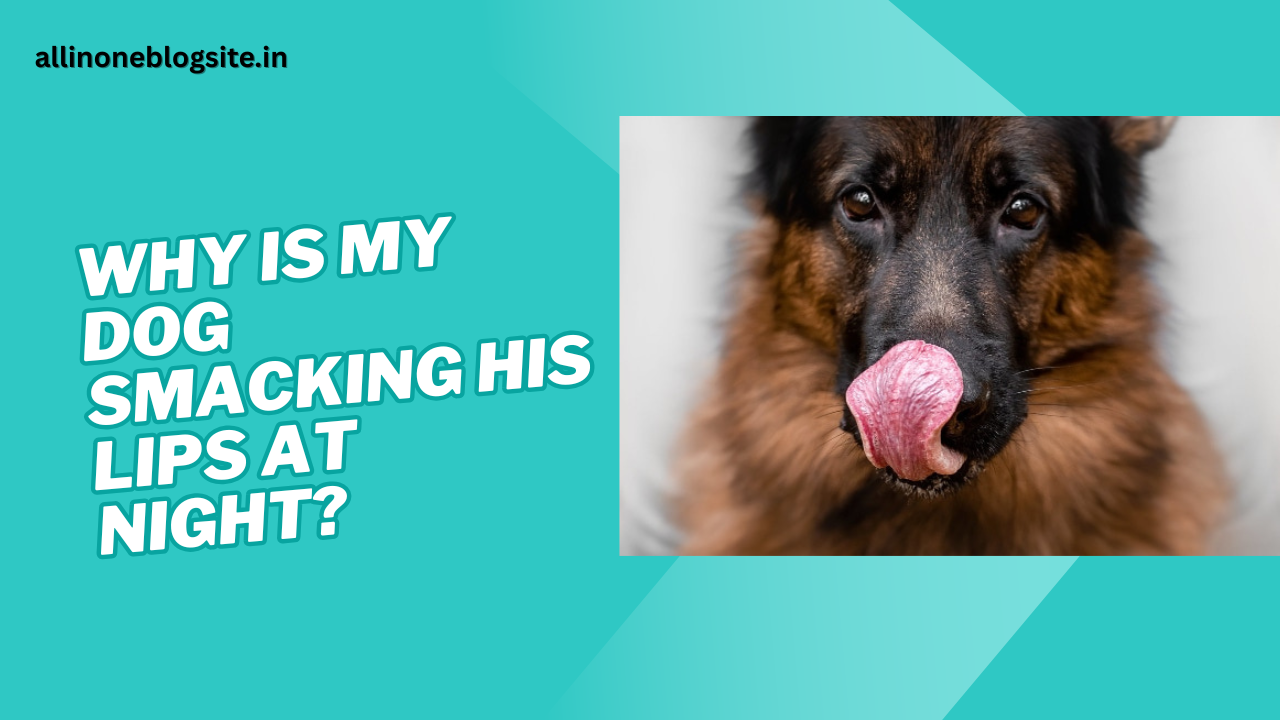
Dogs have many different ways of talking to each other and us, namely, barking, wagging tails, and even licking their teeth. Besides, most dog owners realize their four-legged companions start to make this lip-smacking or licking sound more often at night. It might look as if the dogs only have a funny habit or it might be just a small thing, however, sometimes it can point to a problem that is more serious and needs attention. We will discuss in detail the reasons behind dogs licking their lips at night and what it means, when it is normal, and when it might be a sign of something more serious. Besides, it will have how to react, how to console your pup, and when to go to a vet. The author has used easy-to-understand English language which is highly readable by all pet owners.
1. What Does Lip Smacking in Dogs Mean?
Dogs often make a loud noise when their tongue and lips move rapidly. This behavior is called lip smacking. It might seem like your dog is licking the air or chewing something that is not there. This behavior is fairly common, and in the majority of cases, it is not harmful. Some of the reasons are as follows:
- A natural way to wet their mouth
- A sign of expectation (like waiting for food or treats)
- A technique to ease their anxiety or uncertainty
- A usual grooming habit just before sleep
Nevertheless, persistent or strange lip-smacking, especially at night, can, at times, indicate a medical or behavioral problem.
2. Why Dogs Smack Their Lips More at Night
Often dog owners will be the first to notice this habit become more pronounced after sunset. Let’s consider some potential reasons.
A. Relaxation Before Bed
Dogs, a creature with the same nature as humans, have their own bedtime rituals. A dog could be too tired to sleep and lip-smacking might be one of the ways he/she tries to calm down. It has been said that in humans, a sigh or even stretching can serve the same purpose.
B. Dry Mouth or Dehydration
Nighttime lip smacking might be a sign that your dog is suffering from dry mouth. Possible causes include:
- Not having enough water prior to bedtime
- Resting next to a heater or in an arid environment
- Mouth breathing while sleeping
What to do:
- Ensure that your canine has clean water accessible throughout the night.
- Use a humidifier to keep the air moist if your place is very dry.
C. Dental or Gum Problems
One of the primary reasons for continuous lip smacking is dental problems. During the night when your dog is less active, he may feel discomfort more acute. Possible issues are:
- Destruction of teeth, sometimes a cavity is formed
- Infection in gums
- Teeth broken or accidents in the mouth
- Overgrowth of plaque
Signs:
- Strong-smelling breath
- Salivation
- Mouthing
- Refusal to eat
If you notice these signs, make a dental appointment for your dog with the vet.
3. Medical Reasons for Lip Smacking at Night
In some cases, this trait can be associated with physical or health-related issues. Here are the potential reasons:
A. Nausea or Upset Stomach
Lip-smacking can be an indication of nausea in its initial stage. Besides this, dogs might also repetitively swallow or lick their lips to make the stomach acid less irritating.
Possible explanations:
- Eating too fast
- Digestive problems
- Empty stomach (especially prior to breakfast)
- Acid reflux
Advice: Offering a small snack before bedtime might stave off morning nausea in case your dog’s stomach gets empty during the night.
B. Acid Reflux (Gastroesophageal Reflux)
Acid reflux is one of the prevalent reasons of lip-smacking during the night. When a dog lies down, the stomach acid can migrate up which causes slight irritation. Dogs will often resort to licking or smacking their lips as a way to ease this situation.
Ways out:
- Feed your dog smaller meals more often.
- Do not feed right before sleeping.
- If your veterinarian recommends, keep their sleeping position slightly raised.
C. Dental Pain
Toothache or gum swelling can cause dogs to lick and move their lips excessively. Pain is more intense during the dog’s inactive time and also when the saliva flow is reduced in the night.
D. Oral Injuries or Foreign Objects
A piece of food, grass, or small object lodged in your dog’s mouth can cause the dog to lick or smack its lips regularly. Look in their mouth thoroughly or have the vet examine it.
E. Seizure or Neurological Disorders
Though rare, nighttime lip smacking can be a sign of mild seizures occurring before or after.
Other indications:
- Twitching at night
- Unexpected rigidity or shaking
- Inability to comprehend upon waking
Never hesitate to take your dog to the vet if you notice any neurological symptoms.
4. Behavioral Causes of Nighttime Lip Smacking
In case your vet rules out medical issues, the cause might be emotional or behavioral. Dogs communicate their feelings through body language and behaviors.
A. Stress or Anxiety
Nervous dogs often continuously lick or smack their lips. They might feel insecure at night when the surroundings are quiet or dark.
Possibilities:
- Outside loud noises
- Being away from their owner
- Change in sleeping place
- New pets or people in the house
Ways to help:
- Make a sleeping area that is calm and comfortable.
- Use scents that are familiar, like a blanket that smells like you.
- Turn on a nightlight if your dog is scared of the dark.
B. Boredom or Attention-Seeking
An ignored dog might develop repetitive actions to attract attention. Lip smacking can be one of those ways.
Advice:
- Ensure your dog gets enough exercise during the day.
- Devote a little time to bonding before going to bed.
- If it’s not health-related, don’t reward lip smacking with extra attention.
C. Conditioning or Habit
In some cases, lip smacking becomes a conditioned response.
5. Environmental Triggers
Shifts in the home environment even on a minor scale may trigger strange nighttime behavior.
Factors contributing to the environment:
- Temperature fluctuations: Cold air may lead to dry mouth or shivering.
- New sheets or odors: Dogs have a keen sense of smell and feel.
- Allergens: Dust and detergent on the dog’s bed can cause nose or mouth irritation.
Stable and comfortable living conditions mean no unnecessary lip smacking.
6. When Lip Smacking Is Normal
Occasional lip smacking is not a cause for concern. It can be absolutely instinctive if it is infrequent.
Regular situations:
- After a meal or drink
- Grooming
- Bedtime
- Nervous for a short period but calming
If your dog is otherwise normal, eating well, and sleeping soundly, the behavior is probably non-harmful.
7. When to Worry
Keep an eye on the situation if the behavior becomes frequent or is accompanied by other signs.
Some warning signs are:
- No desire to eat
- Throwing up or choking
- Salivating a lot
- Using paws to get to the mouth
- Moaning or showing discomfort
- Losing weight
- Unpleasant smell from the mouth
If you observe any of these, reach out to your vet without delay.
8. How to Help a Dog Who Smacks Lips at Night
There are numerous actions you can take at home to make your dog feel more comfortable and to protect him/her.
Step 1: Examine Their Mouth
Check for food residue, sores, or decayed teeth. Be gentle and use a flashlight.
Step 2: Offer Water
Always keep fresh water in your dog’s reach. Drinking water will help lessen dryness and irritation.
Step 3: Regularly Clean Teeth
Either brush your dog’s teeth daily or give dental treats to prevent tartar buildup.
Step 4: Change Feeding Schedule
Feed smaller meals throughout the day if you suspect hunger or acid reflux. Avoid giving food immediately before going to sleep.
Step 5: Establish a Soothing Night-Time Routine**
- Turn the lights down low
- Minimize sounds
- Place a cozy bed or crate with comforting scents
Step 6: Do Not Stress
It is advisable to keep a consistent sleep schedule. Dogs are accustomed to routine and hence, feel secure.
Step 7: Consult a Vet When Necessary
If the behavior of your dog does not get better after a few days, then it is better to seek the opinion of a professional. Early diagnosis is a key factor in avoiding complications.
9. Medical Interventions for Non-Stop Lip Smacking
If an underlying medical condition is detected, your veterinarian might suggest one or more treatments to address it. Here are some of the typical treatment options:
- Antacids or medications for stomach to treat acid reflux
- Root canal treatment or extraction for dental issues
- Antibiotics for bacterial infections
- Anti-inflammatory medications for pain caused by inflammatory conditions or injuries
- Counseling if the issue is related to anxiety
Moreover, your veterinarian may recommend a specific diet and/or supplements that would be beneficial for the health of the dog’s digestive system and oral cavity.
10. Natural Home Remedies (Vet-Approved Support)
There exist some natural methods, if approved by the veterinarian, that can help mitigate the mild lip smacking situation.
- Coconut oil (in small quantities): It hydrates the mouth and gums
- Cooled chamomile tea: It acts as a mild tranquilizer both for the mind and stomach.
- Plain pumpkin puree: It facilitates digestion and is anti-nausea.
- Dental chews: They help in cleaning the mouth and soothe any discomfort.
Always consult your vet before administering home remedies.
11. How to Stop Lip Smacking from Happening Again
A. Keep Up With The Dog’s Dental Health
- Brush dog’s teeth daily or on alternate days.
- Make appointments for the professional cleanings once every year.
B. Correct Diet
Supply high-quality and easy-to-digest food. Do not give them leftovers and steer clear of spicy food.
C. Keep Thirst Meter Steady
Make it a point to encourage your dog to drink water regularly. If they prefer, you can get a pet fountain that provides moving water.
D. Monitor Behavior Changes
The appearance of suddenly new behaviors can be a sign of discomfort. It is important to observe the lips smacking and to take note of when it occurs.
E. Manage Stress
- Establish a regular daily routine.
- Provide toys or puzzles for mental stimulation.
- Give love and comfort but don’t overdo it.
12. Nighttime Comfort Tips for Dogs
Here are some tips to make nights more comfortable and to minimize odd behaviors such as lip smacking.
- Offer a cozy and secure bed.
- Play low background music. Gentle sounds can soothe nervous dogs.
- Do not allow sudden loud noises. If there are fireworks or noise from outside, close the windows.
- Maintain the same sleeping location. Changing dog beds too frequently can lead to confusion for your pet.
13. Myths About Lip Smacking in Dogs
Myth 1: Lip smacking always means hunger
Not really. It can also indicate nausea, stress, or toothache.
Myth 2: Only dogs with a health problem will smack their lips
Even healthy dogs may do it when they are relaxing or dreaming.
Myth 3: It’s okay to ignore it completely
If the behavior becomes more frequent or lasts for days, it’s better to consult a veterinarian.
14. When to Visit the Vet Immediately
Contact your veterinarian if your dog:
- Is not eating or drinking
- Has bleeding in the mouth or vomit
- Is crying while eating or sleeping
- Is showing pain in the mouth area
- Smacking lips non-stop for hours
Quick action can help to turn minor problems into major ones.
15. Frequently Asked Questions
1. Why does my dog smack his lips in the middle of the night?
It might be because of mouth dryness, acid reflux or relaxation before sleep. If it occurs frequently, check for dental or gastrointestinal issues.
2. Is there any reason to be concerned if my dog only occasionally licks or smacks his lips?
No. Smacking the lips from time to time is perfectly natural. Just in case, you’d better keep an eye on frequent smacking or if it’s accompanied by any other abnormal behavior.
3. Is there a connection between smacking and anxiety?
Yes. When dogs feel insecure or are nervous, they might lick or wipe their mouth as a sign of anxiety.
4. Is there a possibility of linking lip smacking to dreams?
Sometimes. Canines do dream just like human beings do. When they are dreaming about eating or drinking, they might even smacking their lips during sleep.
5. Is it a problem?
It is not typically a problem. But if you see drooling, vomiting, or loss of appetite, it is better to check with a vet.
16. Summary: Key Takeaways
- Occasional lip smacking is normal.
- Frequent nocturnal smacking may indicate different conditions, including dryness, hunger, anxiety, or a medical issue.
- Monitor the situation and look for other symptoms.
- Make sure your dog has enough water, is comfortable, and is well-fed.
- Seek veterinary advice for any discomfort or behavior that lasts.
17. Final Thoughts
Through many slight movements, dogs convey what they feel. One of those gestures is lip smacking. During nighttime, it may just mean that your dog is gradually getting to sleep, feeling good, or dreaming. However, frequent or heavy lip smacking should not be overlooked. It could be a sign of dry mouth or something more serious like a dental issue or acid reflux. The best care for your pets is to watch, learn, and patiently and lovingly respond. A serene, healthy, and cozy atmosphere will allow your dog to sleep soundly — with no strange nighttime smacks.
Also Read: Vaccinated Dog Scratched Me with Nails: What You Should Know and Do Next.