Introduction
The lung cancer is a type of cancer that is very common and deadly around the globe. One of the points of early detection is that it greatly influences the success of treatment. The modern imaging technology is so good that it allows the doctors to see lung cancer before the symptoms are very pronounced. PET scan is one of the most accurate and high-tech ways to find out whether or not cancer is active in the body, and it is also among the tools that are used to detect this condition early. But what exactly is a PET scan? And is it really that a PET scan can detect lung cancer with the correct amount of accuracy?
This article has all your questions clarified in an uncomplicated manner. You will find out:
• What is a PET scan and its working
• How it detects lung cancer
• Differences between PET and PET/CT
• Expectations before, during, and after the test
• Its accuracy
• When doctors recommend it
• Its advantages, risks, and limitations
Let us begin with the basics.
What Is a PET Scan?
PET is the abbreviation for Positron Emission Tomography. It is an imaging test that allows doctors to see the activity of the body’s cells, not only how they look.
How it works
• A tiny quantity of radioactive tracer is infused into your bloodstream.
• This tracer is generally a form of sugar called FDG (fluorodeoxyglucose).
• Tumorous cells utilize more sugar than the usual cells because of their rapid growth.
• The radioactive sugar vector gathers in these active cells.
• The PET scanner picks up the radiation and produces detailed 3D images.
What PET scans show
• Areas of increased cell activity, which could be a symptom of cancer.
• Cancer’s movement (metastasis) to other regions of the body.
• Treatment effect, indicating if the cancer is reducing or increasing in size.
PET scans, unlike ordinary X-rays or CT scans that display anatomy, provide a picture of physiology and metabolism — how cells act in the body.
PET vs. PET/CT: What’s the Difference?
As of today, most hospitals have adopted PET/CT scanners which are basically the result of fusion of two different techniques, Positron Emission Tomography (PET) and Computed Tomography (CT) into one machine.
• PET reveals the functional status of a cell.
• The detailed images of the body structures are provided by CT.
• Anatomy and function in a single scan if done together.
Benefits of PET/CT
• Small lung nodules are detected with higher accuracy.
• Staging (finding out the extent of cancer) within the reach of the technique.
• The need for unnecessary biopsies or surgeries is eliminated.
This combination of imaging gives oncologists a comprehensive view of the tumor’s activity as well as its location.
Can a PET Scan Detect Lung Cancer?
Indeed. A PET scan is among the leading tests that are able to both detect lung cancer and determine its stage accurately.
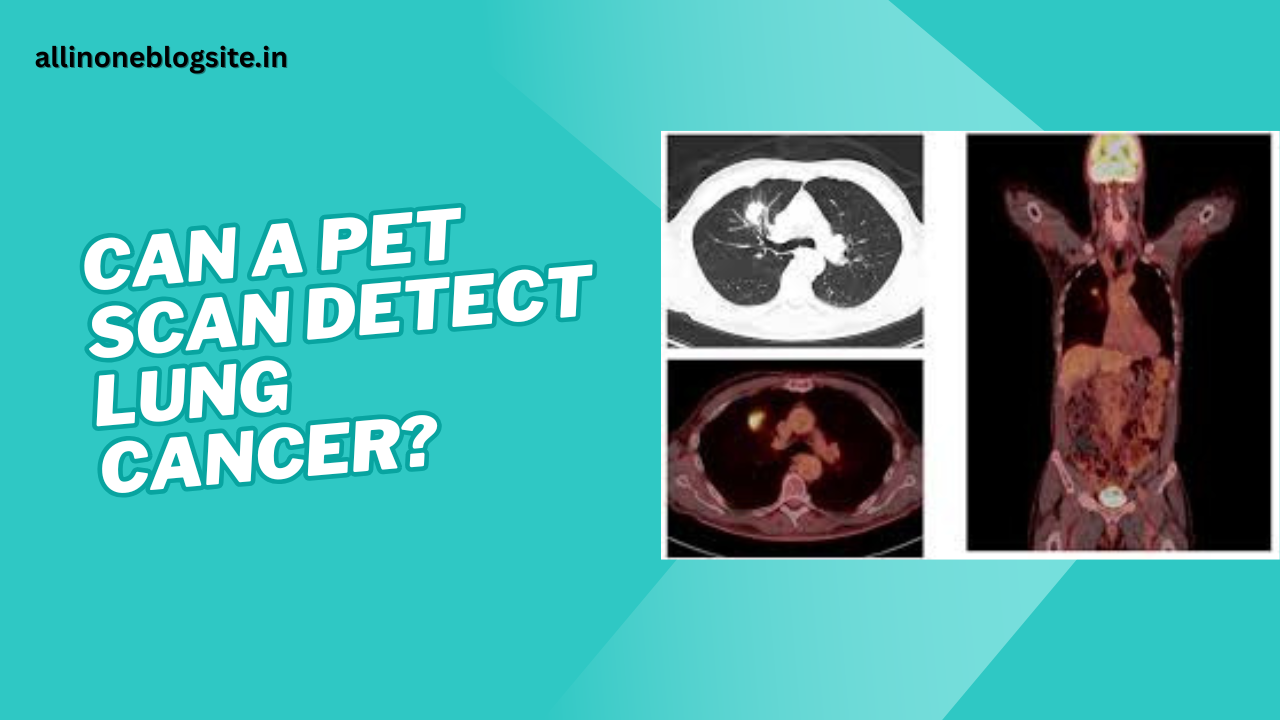
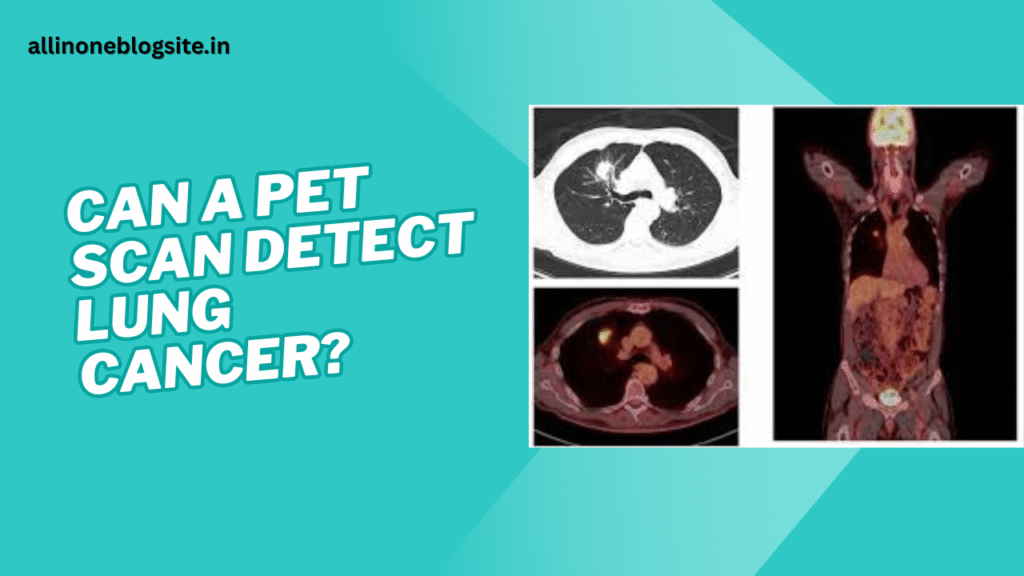
How lung cancer detection is performed by PET scanning
• The FDG tracer is taken up by the lung cells that are very active metabolically.
• Cancerous lung cells usually have a higher tracer uptake.
• Thus, these regions are seen as bright “hot spots” on the PET scan image.
• The scanner indicates the presence of cancer and its spreading either to the lymph nodes nearby or to distant organs.
When it is the most useful
Medics use PET scans for the following purposes:
• To detect lung nodules or masses that appear suspicious.
• To establish if a lung growth is possibly malignant.
• To grade lung cancer by determining its spread.
• To assess the effectiveness of treatment.
• To find out if there has been a recurrence after treatment.
PET Scan and Lung Nodules
A nodule in the lung is a tiny lesion or mass that can be detected via a chest X-ray or CT scan. Nodules are not always cancerous. Some of them are consequent to infections, inflammation, or scarring.
A PET scan allows you to differentiate between an active and a non-active nodule:
• Cancerous nodules are associated with strong tracer uptake.
• Benign nodules are associated with weak or nonexistent uptake.
This gives the doctors the information they need to make a decision about whether to ACT or not.
How Accurate is a PET Scan for Lung Cancer Detection?
PET scans can be considered very accurate, but still, no test is without flaws. The accuracy varies with factors such as the size of the nodule, the type of cancer, and the patient’s condition.
Accuracy rates
• Sensitivity (detecting cancer): 90–95%
• Specificity (excluding cancer): 75–85%
Hence, it can be said that PET scans are able to detect almost all lung cancers correctly, however, at times inflammation or infection might appear as cancer (this is referred to as a false positive).
Factors that affect accuracy
• Small nodules (<8 mm): They are difficult to recognize.
• Slow-growing tumors: They might not take up much of the tracer.
• Infection or inflammation: They might imitate cancer activity.
In practice, doctors frequently combine the results of PET scans with those from other imaging techniques and biopsies to arrive at a final diagnosis.
PET Scan vs. CT Scan for Lung Cancer Detection
| Feature | PET Scan | CT Scan |
|---|---|---|
| Shows | Function and activity | Structure and anatomy |
| Detects | Active or growing tumors | Size, shape, and location |
| Uses | Radioactive glucose tracer | X-rays |
| Accuracy for staging | High | Moderate |
| Detects small nodules | Sometimes limited | Excellent |
| Used for | Detecting spread and treatment response | Initial detection and guidance |
A CT scan may find a lung mass first, but a PET scan helps confirm whether it’s cancer and how far it has spread.
When Doctors Recommend a PET Scan
Doctors typically put in a PET or PET/CT scan request when encountering one of the following situations:
• After a CT scan or X-ray revealing a suspicious mass.
• When cancer needs to be confirmed prior to a biopsy or surgery.
• When the cancer stage (degree of advancement) needs to be determined.
• When cancer treatment progress (chemo or radiation) is to be monitored.
• When the doctor is checking for cancer recurrence post-treatment.
How to Prepare for a PET Scan
Good preparation is the key to having the most accurate results and avoiding the inconvenience of having to repeat the test.
Before the scan
• Refrain from eating for 4–6 hours before the test.
• Only drink water.
• Caffeine, alcohol, and heavy exercising should be avoided for 24 hours prior.
• Inform your doctor about diabetes, pregnancy, or medications.
On the day of the scan
• Opt for relaxed and loose clothing.
• You might have to take off any metal accessories.
• The tracer will be injected into your arm.
• You need to wait for 30–60 minutes for the tracer to circulate in your body.
• Afterwards, you will be asked to lie still on the scanner bed while it takes the images.
During the PET Scan
The procedure is entirely without pain and lasts approximately 20–45 minutes.
This is what occurs:
- You recline on a narrow platform that gets pushed into a big machine.
- The machine rotates gradually around your body.
- You have to be very quiet to obtain sharp pictures.
- The marker is invisible for you; it is inside your body.
From a remote space, technologists supervise you and they can communicate with you during the scan.
After the PET Scan
Normally, you will be allowed to leave for home right after the procedure.
Tips after the scan
• Drink lots of water to assist in getting rid of the tracer.
• Make frequent trips to the restroom.
• Wash your hands every time after going to the toilet.
• As a safety measure, avoid contact with pregnant women or babies for 6 hours (just in case).
The radioactive tracer disintegrates rapidly and gets out of the body through urine and sweat 24 hours.
PET Scan Results: What They Mean
At first a radiologist or nuclear medicine doctor would review your scan who then will send a report to your notifying doctor’s office.
Possible findings
• No abnormal activity: There is absolutely no cancer.
• Mild tracer uptake: It might indicate an infection or inflammation.
• High tracer uptake: It points towards cancer or a very active tissue area.
There will be a conversation about the results between you and your doctor, sometimes a biopsy will be done for confirmation.
PET Scans for Lung Cancer Staging
The term staging refers to the process of finding out how advanced a cancer is and if it has metastasized.
PET scans are able to find:
• Cancer within the lungs
• Spread to lymph nodes
• Spread to bones, liver, or other organs
Commonly detected stages
• Stage I–II: Cancer only in the lungs
• Stage III: Cancer has spread to the nearest lymph nodes
• Stage IV: Cancer has spread to other organs far away
Correct staging gives a good basis for doctor’s oncological treatment selection: either surgery, chemotherapy or radiation.
PET Scans During and After Treatment
Doctors’ use of the PET scans serves for detection and also as follows:
• Treatment monitoring — check if the tumor is shrinking.
• Recurrence detection — see if cancer is back.
• Radiation planning — by pinpointing exact the active areas of cancer.
During or after cancer therapy, PET scans are continuously performed with a frequency of every few months or so to facilitate care management.
Benefits of a PET Scan
• Accurately and promptly detects cancer.
• Active cancer is differentiated from scar tissue.
• Hidden metastases, which are missed by other scans, are detected.
• Unnecessary surgical operations are avoided.
• Customized treatment plans are created.
In the case of lung cancer, PET scans are widely accepted in the field of modern oncology.
Risks and Safety
When PET scans are done under medical supervision, they are really safe.
Small radiation exposure
The radiation dose is very small, almost similar to a few CT scans or two years’ worth of natural background radiation.
Possible mild effects
• Slight pain or bruising at injection site
• Rare allergic reaction
• Temporary fatigue
If you are pregnant or nursing, tell the doctor — he/she might postpone the test or take necessary precautions.
PET Scans and False Results
A PET scan may sometimes display:
• False positive: A non-malignant condition resembling cancer (e.g., infection, inflammation).
• False negative: Missed cancer that is very small or growing slowly.
That is why PET results are always supplemented with CT scans, MRIs, and biopsies for a comprehensive diagnosis.
PET Scan Limitations
• Can’t tell what type of cancer — only how active cancer is.
• Nodules smaller than 8 mm might not be visible.
• Certain slow cancers may not take up the tracer strongly.
• Very costly and not always accessible everywhere.
Despite these restrictions, PET still counts as one of the most efficient techniques in diagnosing and staging lung cancer.
Alternatives to PET Scans
Before or after a PET scan, doctors might suggest other tests:
• Chest X-ray: The initial method to detect abnormalities.
• CT Scan: Provides thorough lung anatomy.
• MRI: Indicated if there is a suspicion of involvement of the brain or spinal cord.
• Biopsy: Makes cancer diagnosis by checking tissue.
It is common practice to carry out PET scans together with these tests to arrive at the most accurate diagnosis.
Pet Scans and Lung Cancer – FAQs
1. Is it possible to detect lung cancer at an early stage with a PET scan?
Yes, the detection is more certain when the tumor has taken over more sugar and is thus active. Nevertheless, the tiniest of tumors might require CT or biopsy for confirmation.
2. What is the duration of a PET scan?
Usually, it takes 2-3 hours of your time which includes the preparation and waiting time.
3. Is there any pain associated with a PET scan?
No, the only thing is the small prick of a needle for the tracer injection.
4. Is it possible to show the spreading of cancer through sex?
Yes, the detection of cancer spread to lymph nodes and other organs is possible through PET scans.
5. What does lung cancer look like on a PET scan?
It shows up as an area that is very bright or glowing because of the high sugar uptake.
6. How often are PET scans necessary?
Only as instructed by your oncologist — mostly for staging, monitoring, or checking recurrence.
7. Would a PET scan be able to miss lung cancer?
Very rarely but yes. The small or slow-growing tumors might not be so clear.
Life After a PET Scan
There is no special time required for recovery after your scan. You can, as usual, go back to daily activities, work, and meals.
A few simple tips for care:
• Drink plenty of water to help the tracer pass through your body.
• If you feel tired, then give yourself enough rest.
• Show up for the follow-up appointment where the results will be discussed.
Conclusion
Then the question arises: Is it possible for a PET scan to detect lung cancer? The answer is a definite yes, and with an incredible precision rate. A PET scan is capable of showing not only what a regular CT or X-ray could have shown but also the metabolic activity of your lung cells which makes it easy for the doctors to spot the tumor, decide on its stage, and prescribe the right treatment accordingly. Although no single test is foolproof, PET scans are still among the topmost reliable and potent devices in lung cancer detection and treatment planning. Once you comprehend what to expect and how the scan functions, you will be able to undergo the exam with no fear at all, since this technology will in fact provide you with the very essential early detection indicators.
Also Read: After PET Scan: How Long Are You Radioactive?.