Introduction
A PET scan is among the most sophisticated methods by which physicians could monitor the functioning of your organs and tissues. It is especially useful in early diagnosis of diseases like cancer, heart disorders, and brain ailments. However, a very common question is frequently asked by patients after the procedure — “For how long will I be radioactive post-PET scan?”
The concise reply would be: Not for a very long time. The trace amount of radioactive material that is administered during the PET scanning procedure generally gets eliminated from your body in a day or even less. Although it may seem like a long wait, it is much more relaxing to understand the reasons and the process of it.
You will be provided with the following information through this article:
• What occurs during a PET scan
• The rationale behind using radioactive tracers
• Duration of radioactivity
• Post-scan precautions
• Your safety and family tips
Let’s begin with the most important points.
What Is a PET Scan?
PET is an acronym for Positron Emission Tomography. An imaging technique is used to observe how your body operates on a cellular level.
The function of a PET scan
The physician may suggest this examination for the following purposes:
• Confirm or observe the presence of cancer
• Assess the heart’s performance
• Look into brain activity in conditions such as seizure disorders or Alzheimer’s
• Evaluate the blood supply and metabolism in the organs
The procedure
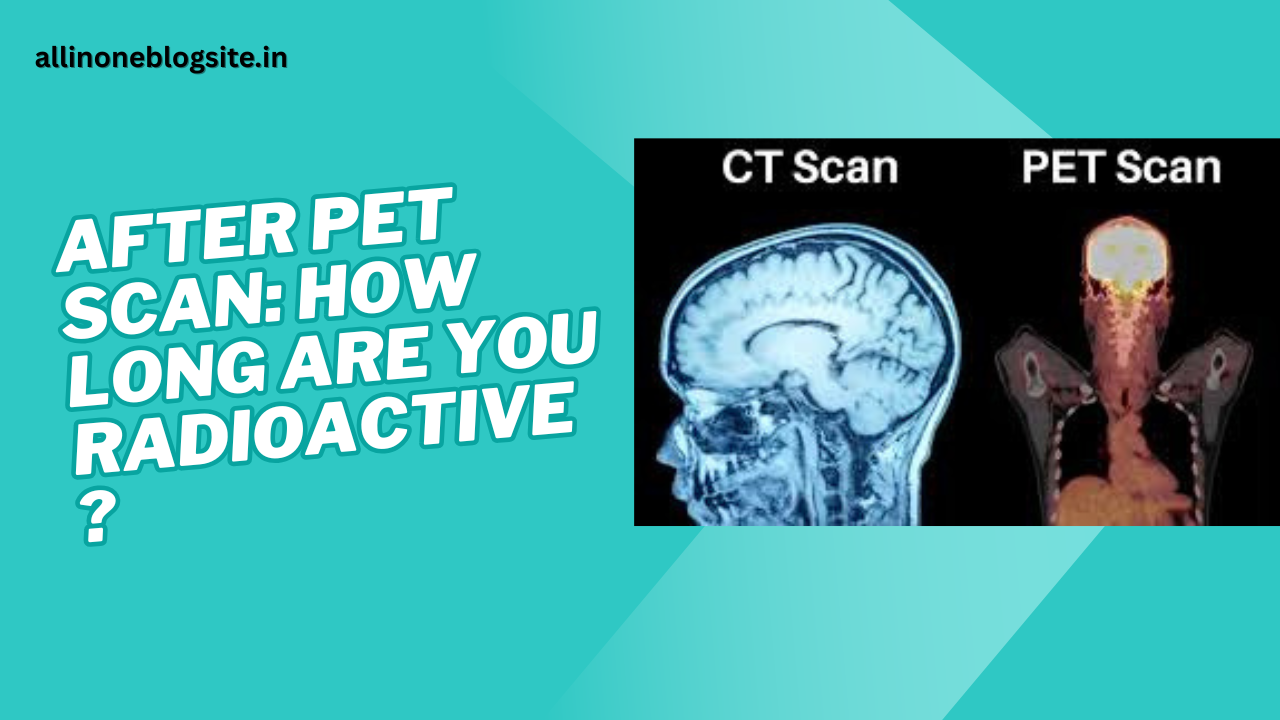
A very small quantity of radioactive substance (known as a tracer) is injected into your vein. This tracer circulates in the blood and gets accumulated in specific tissues or organs. When energy is released from it, a scanner picks it up and generates very detailed 3D photos.
Commonly used tracers
F-18 FDG (fluorodeoxyglucose), sugar, and a small amount of radioactive fluorine are the most common tracer. Because active cells (like cancer cells) use more sugar, they absorb more of the tracer, allowing doctors to see them clearly on the scan.
Why Radioactive Tracers Are Safe
The term “radioactive” might evoke fear, but in the case of PET scans, the radioactivity is so low and assiduously calculated that it does not pose a risk at all.
• The amount of the tracer used is that low — only enough for creation of sharp images.
• The radiotracer is not retained in the body for long.
• The process of natural decay starts after a few hours, and the wonders of the body’s mechanisms kick in — it gets rid of the remaining tracer through pee and sweat.
Safety in a nutshell
• Medical tracers are meant to be biodegradable at a rapid pace.
• The amount of radiation you are exposed to is equivalent to a few X-rays or less than what you get naturally in a year.
• Within 6-12 hours your body has eliminated most of the heavy stuff.
How Long Are You Radioactive After a PET Scan?
The time that you will be radioactive will depend primarily on the half-life of the tracer that has been used.
What is half-life?
The half-life definition states it is the period in which half of the radioactive isotopes will have decayed and, thus, lost their energy.
In the case of F-18 FDG, it is a little over 110 minutes (hardly 2 hours). This brings about the following consequences:
• After 2 hours the radioactivity has decreased by 50%.
• After 4 hours only 25% of the original amount remains.
• After almost 8 hours that level becomes almost negligible.
After 24 hours, your body has got rid of more than 99% of the original tracer.
Thus, in practical terms:
• One is said to be a little radioactive for about 6–12 hours.
• After 24 hours you are no longer radioactive in any way that can be detected.
Timeline of Radioactivity After Your Scan
| Time after injection | Level of radioactivity | What’s happening in your body |
|---|---|---|
| 0–2 hours | Highest level | Tracer circulating and absorbed by tissues |
| 2–6 hours | Rapid decrease | Radioactive decay and body elimination begin |
| 6–12 hours | Very low level | Most tracer exits through urine |
| 24 hours | Almost none | Less than 1% remains; radiation is negligible |
What Happens Right After a PET Scan
Generally, right after the scan you will be permitted to return home. Although, there are no major restrictions, some easy and healthy ways can help your body to get rid of the tracer more quickly.
Immediately after the test:
• Drink a lot of water (minimum of 6-8 glasses).
• Go to the bathroom often to get rid of the tracer.
• Make sure to wash your hands thoroughly after going to the bathroom.
• You can eat normally unless otherwise instructed.
In the first 6–12 hours:
• Stay hydrated as before.
• Avoid close, prolonged contact (within 3 feet for hours) with pregnant women or small children.
• Short interactions like talking, or being in the same room are completely fine.
• Most people go back to work and their normal life straight away.
After 24 hours:
• Almost all of the radioactive material has been eliminated from your body.
• You can return to your normal activities without any fear of radiation.
Why Hydration Is Important
The elimination of the tracer in urine is facilitated by water. The more you consume, the more rapidly your body gets rid of the substance.
Hydration also has the following added benefits:
• Decreases tiredness
• Maintains proper kidney function
• Avoids build-up of the tracer
If you have any fluid restrictions for medical reasons, make sure to stick to your doctor’s recommendations.
Is It Safe to Be Around Family After a PET Scan?
Yes. The radiation exposure from a PET scan is very weak and short-lived.
However, as a precaution during the first few hours:
• Do not hug or be very close to pregnant women for a long time.
• Do not hold babies for longer than a few minutes.
• Normal contact and conversations of short duration are safe.
You can:
• Eat together
• Sleep in the same bed
• Use public transport
• Be with pets
There is no risk of radiation with these activities.
Managing Bodily Fluids After the Test
The first day after the test, your urine will have very small quantities of the tracer. To maintain proper hygiene, you should:
• Double flush the toilet after using it.
• Use soap and water to wash your hands.
• Attend to any spills quickly.
• Men can opt for sitting down while urinating to prevent splashing.
By the following day, the safety measures are no longer necessary.
Can You Breastfeed After a PET Scan?
If you are nursing, it is best to consult your physician before the scan. The use of tracer will determine:
• Stopping breastfeeding for the duration of 12-24 hours may be required.
• Pump the milk and throw it away during that period to keep the supply going.
Your doctor will specifically inform you of the time when it is safe to start feeding again.
What About Traveling or Airport Security?
In exceptional instances, highly sensitive radiation detectors (like the ones in places such as airports or ports) may detect a very minimal amount of the tracer that is still in your body.
If you are going to travel within 24 hours after your PET scan:
• Bring a note from the doctor or hospital discharge paper that gives a brief explanation of your imaging study.
• This will help avoid any misunderstanding at the security checks.
How PET Scan Radiation Compares to Everyday Exposure
Every person on the planet receives daily a minor dose of natural radiation from the sun, air, and food, and even from the ground, and this is considered the normal exposure.
Here’s how a PET scan compares:
| Source | Approximate radiation dose (mSv) |
|---|---|
| Natural background radiation (1 year) | 3.0 |
| Chest X-ray | 0.1 |
| CT scan (abdomen) | 8–10 |
| PET scan | 7–10 |
So, a PET scan gives you about the same exposure as natural background radiation over a few years — still considered safe and controlled.
PET Scan Common Side Effects
Generally, it is the case that side effects reported by the majority of individuals are non-existent. But there are still some minor things which happen quite frequently and they are as follows:
• Tiredness
• A little bit of soreness where the substance was injected
• Temporary alteration in taste or a little bit of metallic taste
• Dull headache
These discomforts will soon be gone as the radioactive substance is eliminated from the body.
Medical assistance is necessary if you notice any of the following:
• Rash or swelling at the site of injection
• Breathing difficulty
• Feeling dizzy or having persistent discomfort
Such cases, however, are exceptional and very rare.
Post PET Scan Self-Care
Although a PET scan is a procedure that does not require any pain, its process can still leave you worn out especially if you had to go without food for quite a while before your scan.
For your convenience:
• Have several hours of sleep after your test.
• When you are allowed, start with a proper meal.
• Do not worry, anxiety about the outcome can drain you more than the test itself.
• Attend your follow-up visit to talk about the results.
Who Oct It Out As Precautions?
The same criteria apply to certain people who should be slightly more conscious of radiation even though the amount is minimum:
• Pregnant women or potential ones
• Nursing mothers
• Patients with renal impairment (since detoxification may take longer)
• Young children in the same house as the patient (avoid very close contact for that day)
Make sure your doctor is aware if anything from this list is applicable to you.
PET/CT vs. PET Alone – what about the difference in radioactivity?
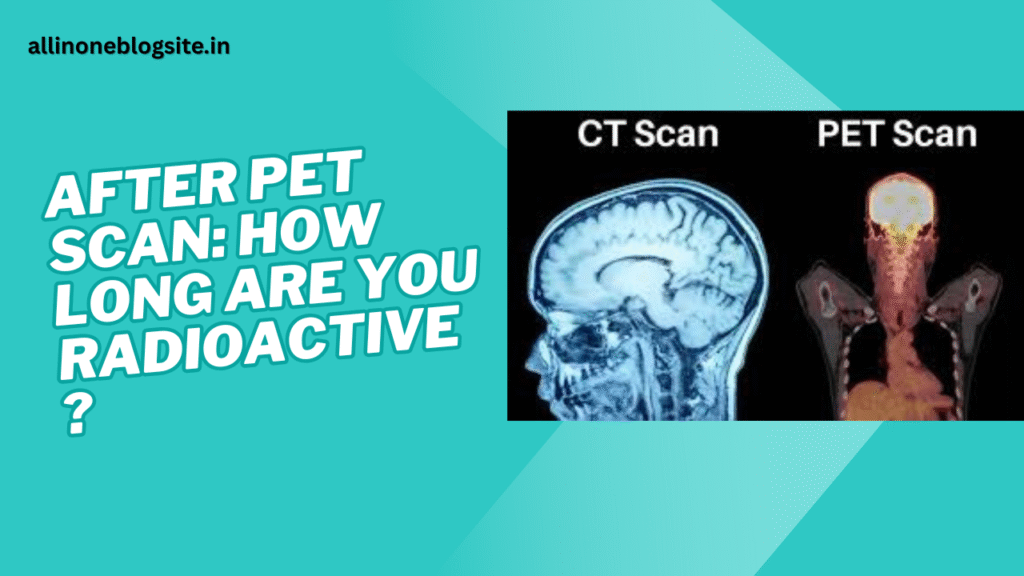
A PET/CT scan is a combination of two imaging techniques:
• PET presents the functional aspects of the organs.
• CT delivers the structural view.
During the CT part, X-rays are used which results in a minor additional dose of radiation, yet:
• You are not made radioactive as a consequence.
• It is only the PET tracer that does and it is still eliminated within 24 hours.
So the overall aftercare is the same for both tests.
Frequently Asked Questions
1. After a PET scan, how long are you radioactive?
Just for a few hours. The radioactivity is mostly gone after 6–12 hours, and almost none is left after 24 hours.
2. Is it safe for me to be with my kids or pregnant spouse?
You are allowed to be, nonetheless, refrain from hugging or any other kind of physical contact for the first six hours.
3. Is it ok to go to work or school?
Definitely. You can do your regular work on the same day unless it involves being very close to infants or pregnant women for a long time.
4. What can I do to get rid of the radiation quicker?
The radiation can be eliminated faster by drinking plenty of water, gentle movements, and frequent urination. All these help in flushing out the tracer.
5. Is post-scan exercise allowed?
Yes. Light activity is permissible as soon as you are ready. Some may feel somewhat exhausted, so they should begin with slow movements.
6. Will I trigger radiation detectors at the airport?
It seldom happens, but there is a possibility of it occurring in 24 hours. Prepare the paperwork of your scan if you intend to travel.
7. Can a PET scan cause infertility?
No. The low-level radiation exposure is short-term and does not harm fertility or reproductive organs.
8. Is there any danger associated with the radiation of a PET scan?
No. It is a very small dose, not enough to do any harm. Safety rules are rigorously followed by the medical teams.
When to Call Your Doctor
If you experience the following symptoms, please contact your doctor:
• Pain, redness, or swelling lasting at the injection site
• Any unexpected allergic reaction
• High fever, though it is very uncommon
Generally, the wait period after the scan is very easy and uneventful for most people.
Why You Don’t Stay Radioactive for Long
There are three basic features of medical tracers:
• They have short half-lives
• They bind to cells for short time
• They are eliminated from the body fast through the normal processes
Your radiation level is already much lower by the time you get home. It’s practically nonexistent by the next day. The tracer does not accumulate in your body, and it does not continue to radiate.
The Science Behind Radioactive Decay
To know the reason of such rapid disappearance of radiation, let us consider a simplified view of the process:
• The radioactive tracer (for instance, F-18) turns into a stable, non-radioactive element.
• Each decay produces a positron which rapidly encounters an electron and the result is the formation of the harmless photons.
• These photons are detected by the scanner to produce the images.
• After the decay occurs, there is no longer any entity left to give out radiation.
This is the reason why after a PET scan the radiation exposure decreases significantly.
PET Scan in Everyday Healthcare
PET scans are one of the best ways to diagnose and monitor diseases. They give only very early and detailed insights that other imaging methods cannot offer.
Doctors take help of PET imaging in:
• Detecting tumors in early stages
• Assessing the effectiveness of treatment
• Finding out the presence of infection or inflammation
• Studying functions of heart and brain
Considering its advantages and the safety aspect, temporary radioactivity is a minor and controllable issue.
What Patients Often Feel After a PET Scan
The majority of patients say:
• They feel slightly tired due to fasting
• They experience a little discomfort due to not moving during the scan
• They feel relieved when the test is done
These reactions are quite normal. You will soon regain your energy after you hydrate and eat.
In case worries about the outcomes make you anxious, consult the physician or direct your attention to quieting down the body and the mind activities during waiting.
Conclusion
There is no reason for concern if you have undergone a PET scan and the issue of radioactivity is concerned. The fading of the slight quantity of the tracer used in the imaging process takes place in several hours and it is practically untraceable the next day. Adhering to simple aftercare procedures — drinking water, keeping personal cleanliness, and limiting the physical proximity a little — will give you comfort and peace of mind.
Also Read: Is Udumbu and Komodo Dragon the Same?.